
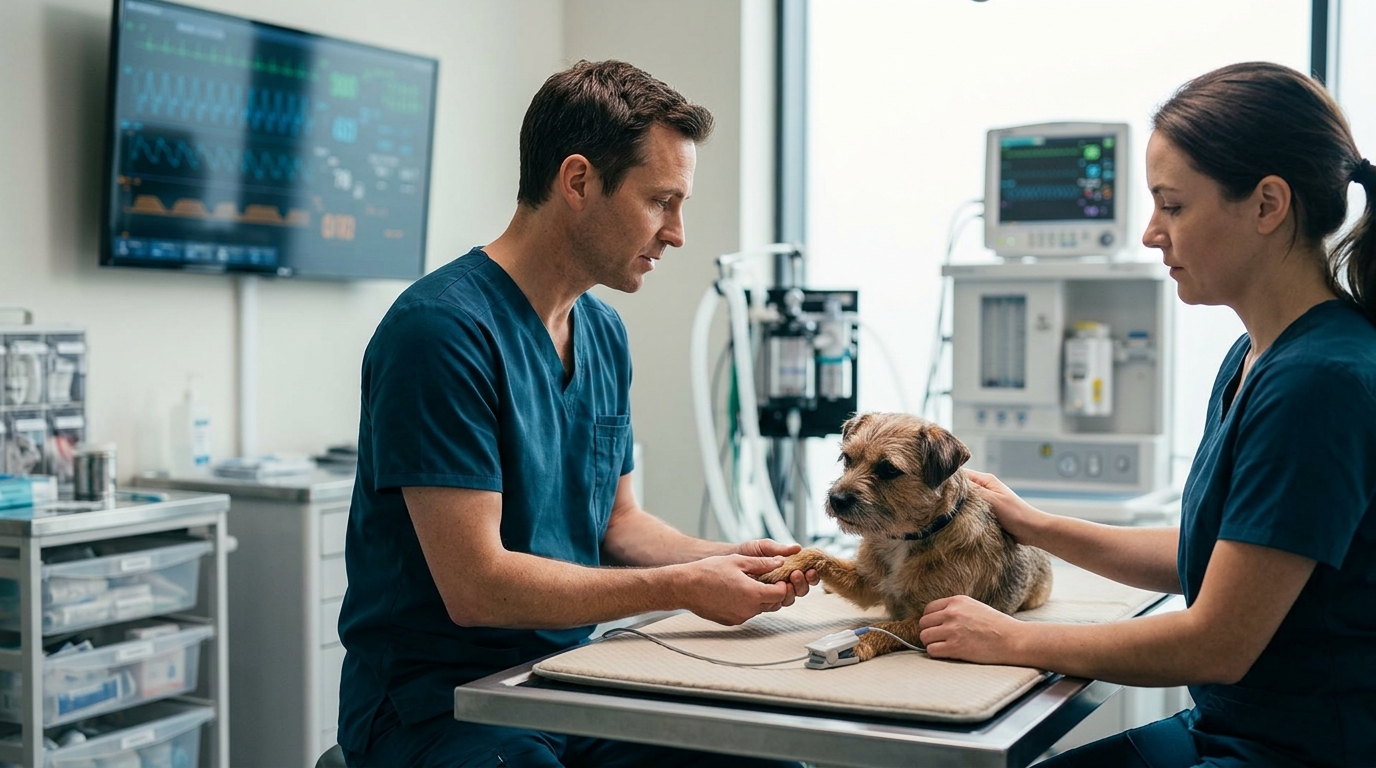
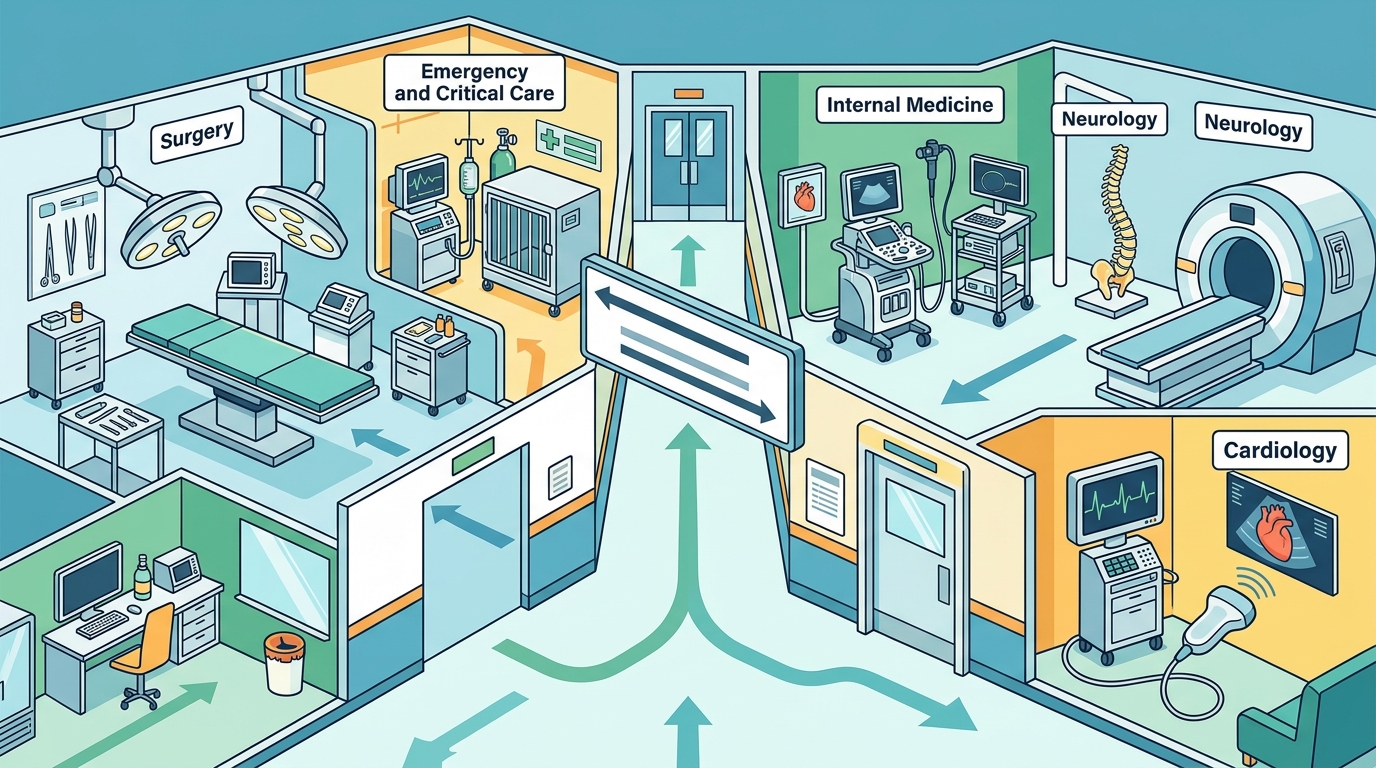
Look for board-certified specialists in emergency and critical care, surgery, internal medicine, neurology, and cardiology. These departments provide advanced diagnostics and immediate treatment for life-threatening conditions. Los Angeles Animal Specialty Emergency & Rehabilitation integrates these specialties under one roof to ensure seamless, rapid care for pets in crisis.
Emergency and Critical Care Foundations
Emergency medicine is the branch of veterinary science focused on the immediate stabilization of animals with acute, life-threatening conditions. This service is the backbone of any 24/7 animal hospital. When a pet arrives with trauma, poisoning, or respiratory distress, the emergency team performs triage to determine the severity of the case. This process ensures that the most critically ill patients receive immediate attention while others are managed based on their specific needs.
Critical care medicine is a specialized field dedicated to the intensive monitoring and treatment of pets who are too ill to be discharged. At LAASER, the critical care team aligns with the standards of the American College of Veterinary Emergency and Critical Care (ACVECC). Diplomates in this field complete rigorous residency training that prepares them to manage complex hospitalized patients. This level of expertise is vital for pets requiring round-the-clock monitoring, advanced fluid therapy, or mechanical ventilation.
The implication for pet owners is clear: a hospital with dedicated critical care capabilities can manage the most severe cases without transferring the patient to a different facility. This continuity of care reduces stress on the animal and provides a single point of contact for the owner during a stressful time.
Advanced Surgical Capabilities
Veterinary surgery is the specialty responsible for treating conditions that require invasive procedures, ranging from soft tissue repairs to complex orthopedic fixes. In an emergency setting, surgical availability is a critical differentiator. Many general practices cannot perform emergency surgeries, forcing owners to transport unstable pets to distant referral centers. A hospital with an in-house surgical team can address issues like ruptured bladders, intestinal obstructions, or severe fractures immediately.
The Surgery department at LAASER utilizes advanced in-house equipment, including a 128-slice CT scanner and C-Arm fluoroscopic imaging. These tools allow surgeons to perform minimally invasive procedures and precise fracture stabilizations. For example, the team performs arthroscopy and joint stabilization techniques such as TPLO (Tibial Plateau Leveling Osteotomy) for cruciate ligament injuries. Having these capabilities on-site means that a pet diagnosed with a broken bone in the emergency room can be scheduled for surgery without the risks associated with transport.
Owners should verify if the emergency hospital has a full-time surgical team or if they rely on external consultants. A dedicated surgical team ensures faster scheduling for critical cases and better post-operative communication with the emergency staff.
Internal Medicine and Advanced Diagnostics
Internal medicine is the specialty focused on the diagnosis and non-surgical management of complex systemic diseases, such as chronic kidney disease, diabetes, and immune-mediated disorders. While often associated with long-term care, internal medicine specialists play a crucial role in emergency settings by interpreting complex diagnostic results. They help determine the underlying cause of acute symptoms that may appear to be simple but are actually manifestations of a deeper systemic issue.
Advanced diagnostics are the tools that allow these specialists to make accurate diagnoses. The Internal Medicine team at LAASER has access to a 32-slice CT scanner, ultrasonography, and various forms of endoscopy. These technologies are essential for identifying conditions that standard blood work or X-rays might miss. For instance, endoscopy can be used to retrieve foreign bodies from the gastrointestinal tract or to biopsy tumors. The ability to perform these diagnostics in-house accelerates the diagnostic process, allowing treatment to begin sooner.
When evaluating an emergency hospital, check if they have access to advanced imaging and laboratory services. A hospital that must send samples to an external lab may experience delays in receiving results, which can be detrimental in a time-sensitive emergency.
Neurology and Cardiology Specialties
Neurology is the specialty dedicated to the diagnosis and treatment of disorders affecting the brain, spinal cord, and peripheral nerves. Neurological emergencies, such as seizures, sudden paralysis, or head trauma, require immediate and specialized evaluation. A veterinary neurologist can perform a detailed neurological examination to localize the lesion and determine the appropriate next steps, which may include MRI imaging or surgical intervention.
Cardiology is the specialty focused on the diagnosis and management of heart diseases and arrhythmias. Many pets present to the emergency room with symptoms of heart failure, such as difficulty breathing or fainting. The Cardiology service at LAASER is led by board-certified cardiologists who utilize advanced diagnostics like echocardiography and Holter ECG monitoring. These tools are necessary to assess heart function and guide treatment. While cardiology appointments are often scheduled, the presence of a cardiologist on staff ensures that emergency cardiac cases can be managed with expert input.
Owners should look for hospitals that have specialists in these high-acuity fields. The presence of neurology and cardiology services indicates a hospital equipped to handle the most complex and life-threatening medical emergencies.
Rehabilitation and Integrative Medicine
Rehabilitation medicine is the specialty focused on restoring function and quality of life to pets recovering from injury, surgery, or chronic disease. While not always an emergency service, rehabilitation is a critical component of the recovery process. Integrative medicine, which includes modalities like acupuncture and pain management, complements traditional veterinary care by addressing the patient's overall well-being.
The Rehabilitation and Integrative Medicine team at LAASER works closely with the emergency and surgical teams to create customized treatment plans. These plans may include physical therapy, acupuncture, and pain management strategies. For example, a pet recovering from spinal surgery may benefit from a structured rehabilitation program to regain mobility. The integration of these services ensures that the pet's recovery is comprehensive and addresses both physical and comfort needs.
When choosing an emergency hospital, consider the availability of rehabilitation services for the post-acute phase. A hospital that offers a continuum of care, from emergency stabilization to long-term rehabilitation, provides a more holistic approach to pet health.
Key Takeaways
- Look for board-certified specialists in emergency and critical care to ensure high standards of acute treatment.
- In-house surgical capabilities are essential for addressing trauma and obstructions without the risks of transfer.
- Advanced diagnostic tools, such as CT scanners and endoscopy, accelerate the identification of complex conditions.
- Neurology and cardiology services are critical for managing high-acuity emergencies involving the brain and heart.
- Rehabilitation and integrative medicine support the long-term recovery and quality of life for pets.
- Continuity of care within a single facility reduces stress and improves communication for pet owners.
Frequently Asked Questions
What is the difference between emergency and critical care?
Emergency care focuses on the immediate stabilization of acute conditions, while critical care involves the intensive, round-the-clock monitoring and treatment of pets who are too ill to be discharged.
Why is in-house surgery important in an emergency hospital?
In-house surgery allows for immediate treatment of life-threatening conditions like ruptured organs or severe fractures, avoiding the risks and delays associated with transferring an unstable patient to another facility.
Do emergency hospitals have access to advanced diagnostics?
Many specialty emergency hospitals have access to advanced diagnostics such as CT scanners, MRI, and endoscopy, which are essential for diagnosing complex conditions quickly.
What is the role of a veterinary neurologist in an emergency setting?
A veterinary neurologist evaluates pets with neurological emergencies, such as seizures or paralysis, to localize the lesion and determine the appropriate treatment plan, which may include surgery or medication.
How does rehabilitation medicine benefit emergency patients?
Rehabilitation medicine helps pets recover function and mobility after surgery or injury, ensuring a smoother transition from the acute phase to long-term recovery.
Should I choose a hospital with multiple specialties?
Yes, a hospital with multiple specialties under one roof provides seamless continuity of care, allowing for rapid diagnosis and treatment without the need for transfers between different facilities.
Choosing the Right Care for Your Pet
Selecting the right emergency veterinary hospital is a critical decision that can impact your pet's outcome. By looking for a facility that offers a comprehensive range of specialized services, you ensure that your pet has access to the highest level of care when it matters most. Los Angeles Animal Specialty Emergency & Rehabilitation is committed to providing this level of expertise, with a team of board-certified specialists ready to assist you 24/7. To learn more about our services or to schedule a consultation, please .