
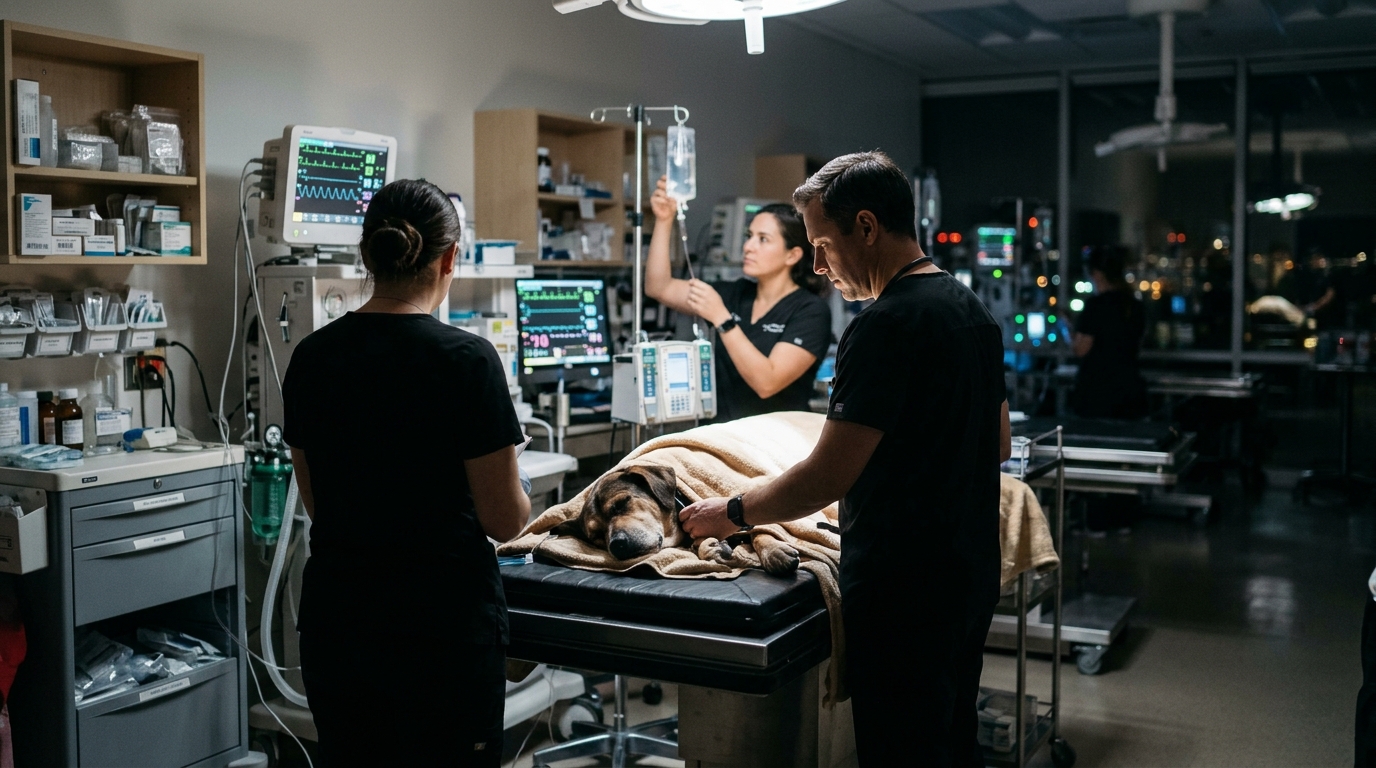
Veterinary critical care is the intensive, round-the-clock medical management for pets with life-threatening conditions. In Los Angeles, LAASER provides this specialized support, aligning with the standards of the American College of Veterinary Emergency and Critical Care (ACVECC). This care is necessary when a pet requires constant monitoring, advanced life support, or complex treatment that exceeds the scope of standard emergency stabilization.
Defining Veterinary Critical Care
Veterinary critical care is a specialized field of medicine focused on the stabilization and treatment of critically ill or injured animals. It differs from general emergency care by its intensity and duration. While an emergency visit often focuses on immediate triage and stabilization, critical care involves prolonged, intensive management. This includes continuous monitoring of vital signs, administration of intravenous fluids, and management of complex organ systems.
The Role of ACVECC Standards
At LAASER, the critical care team is committed to aligning with the standards of ACVECC Diplomates. ACVECC is the American College of Veterinary Emergency and Critical Care, which provides top-of-the-line standards and training for veterinarians specializing in this field. All diplomats of ACVECC have completed state-of-the-art training after finishing their initial veterinarian schooling. This rigorous training allows for intense practice in emergency and critical care, ensuring that critically ill pets receive the highest level of medical attention.
Core Components of Critical Care Treatment
Continuous Monitoring and Support
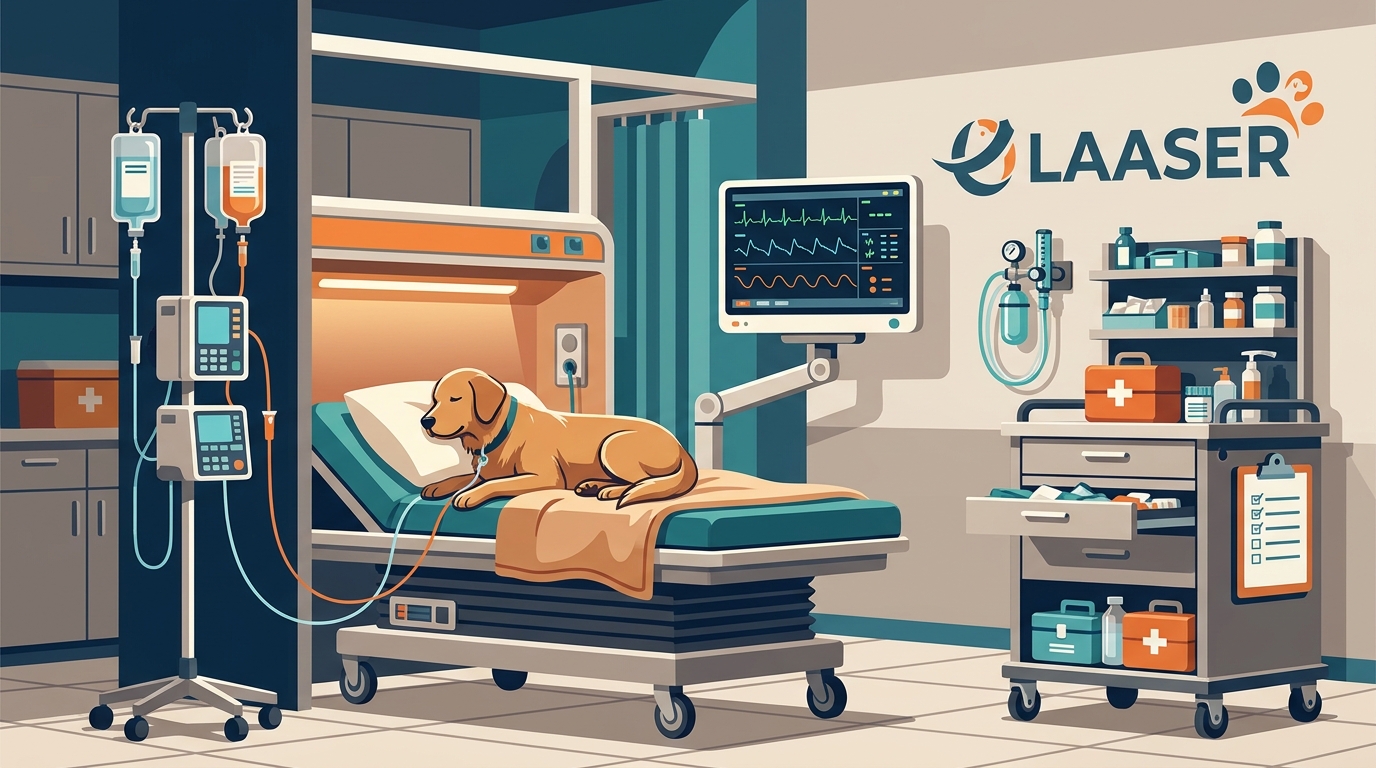
Staff members provide constant care, treatment, and affection to pet patients just as any human would receive in an ICU. This includes continuous monitoring of heart rate, respiratory rate, blood pressure, and oxygen levels. Advanced diagnostics are often utilized to guide treatment. For example, internal medicine specialists may use advanced diagnostics such as endoscopy, ultrasonography, and Computed Tomography (CT) scans to aid in the investigation and treatment of complex conditions. This level of diagnostic capability is crucial for managing critical cases effectively.
When Does Your Pet Need Critical Care?
Not every emergency requires critical care, but certain conditions do. You should consider critical care if your pet is experiencing a sudden illness, injury, or change in condition that could be serious or life-threatening. The decision to admit a pet to critical care is based on the severity of their condition and the need for ongoing, intensive management.
Common Conditions Requiring Critical Care
Conditions that may require immediate veterinary attention and subsequent critical care include difficulty breathing, collapse, severe bleeding, trauma, seizures, repeated vomiting, inability to urinate, toxin exposure, and significant pain. For instance, a pet suffering from a severe toxin ingestion may require continuous monitoring and supportive care to prevent organ damage. Similarly, a pet with a severe respiratory condition may need oxygen therapy and close monitoring of their breathing patterns. If you are unsure whether your pet’s condition is an emergency, it is always appropriate to contact an emergency veterinary hospital for guidance.
The Specialist Team at LAASER
At LAASER, our doctors are passionate about critical care medicine and ensuring the safety and health of our pet patients. The critical care team works closely with other specialty departments to provide comprehensive care. This collaborative approach ensures that your pet has access to advanced diagnostics, specialized treatment, and seamless continuity of care, all within one hospital.
Collaborative Specialty Care
Because our emergency service works closely with our board-certified and specialty-trained teams in Neurology, Surgery, Cardiology, Internal Medicine, and Rehabilitation, your pet has access to a wide range of expertise. For example, a pet with a neurological condition may require input from our Neurology and Neurosurgery team while also receiving critical care support. This multidisciplinary approach allows us to rapidly diagnose complex conditions and provide comprehensive treatment without the delays of transferring your pet between facilities.
The Critical Care Process at LAASER
When your pet arrives at LAASER, one of our triage technicians will promptly assess your pet’s condition to determine the urgency of their medical needs. Pets are treated based on the severity of their condition through a process called triage, ensuring that the most critically ill or injured patients receive immediate attention. If you believe your pet is experiencing a medical emergency, please call us at (323) 800-VETS (8387) so our team can prepare for your arrival.
What to Expect During a Stay
While some pets may be seen immediately, others with less urgent conditions may experience longer wait times as we prioritize the most critically ill and injured patients. Although the waiting room may occasionally appear quiet, our medical team is often actively caring for hospitalized patients, performing emergency surgeries and procedures, stabilizing critical cases, consulting with specialists, and providing ongoing treatment behind the scenes. Every member of our team is working to ensure each patient receives the care they need. We understand that waiting with a sick or injured pet can be stressful. Our team is committed to providing exceptional emergency care while keeping you informed throughout your visit.
Key Takeaways
- Veterinary critical care is the intensive, round-the-clock medical management for pets with life-threatening conditions.
- LAASER aligns with ACVECC standards, ensuring top-of-the-line training and care for critically ill pets.
- Critical care involves continuous monitoring, advanced diagnostics, and specialized treatment.
- Conditions such as trauma, toxin exposure, and severe respiratory issues often require critical care.
- The specialist team at LAASER works collaboratively to provide seamless continuity of care.
- If you are unsure whether your pet’s condition is an emergency, contact an emergency veterinary hospital for guidance.
Frequently Asked Questions
What is the difference between emergency care and critical care?
Emergency care focuses on immediate triage and stabilization of a pet's condition. Critical care involves prolonged, intensive management and continuous monitoring for pets with life-threatening conditions. While all critical care patients receive emergency care, not all emergency patients require critical care.
How long does a pet stay in critical care?
The duration of a stay in critical care varies depending on the pet's condition and response to treatment. Some pets may require only a few hours of intensive monitoring, while others may need several days or weeks of care. The medical team will keep you informed about your pet's progress and expected timeline.
Can I visit my pet while they are in critical care?
Visitation policies may vary depending on the pet's condition and the hospital's protocols. In some cases, limited visitation may be allowed to provide comfort to the pet. Please ask the medical team about visitation options when your pet is admitted to critical care.
What should I bring when my pet is admitted to critical care?
It is helpful to bring any relevant medical records, a list of current medications, and a comfort item such as a blanket or toy. Having this information available can help the medical team provide the best possible care for your pet.
How can I stay updated on my pet's condition?
The medical team will keep you informed about your pet's progress and treatment plan. You can also contact the hospital directly to ask for updates. We are committed to keeping you informed and involved in your pet's care.