
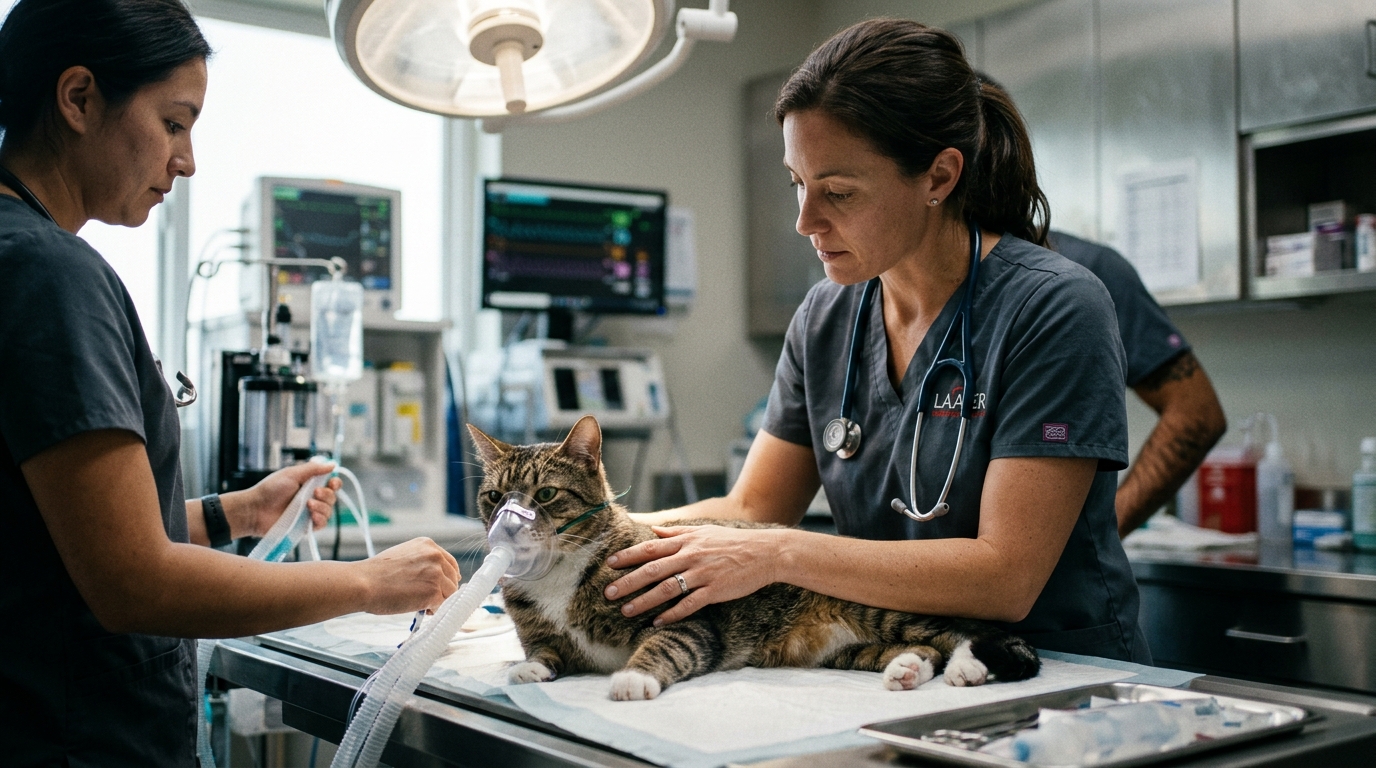
When a cat arrives with severe trauma, the first hours focus on life-saving stabilization before detailed diagnosis. Veterinary teams prioritize airway management, breathing support, and circulation to prevent shock. At Los Angeles Animal Specialty Emergency & Rehabilitation (LAASER), this rapid response is critical for survival. The goal is to keep the patient alive long enough for definitive treatment.
Rapid Triage and Initial Assessment
The moment a traumatized cat enters the hospital, a triage technician assesses the patient's condition. This process determines the urgency of medical needs. Cats are treated based on severity, ensuring the most critically ill receive immediate attention. This rapid sorting is vital in a busy emergency environment.
Emergency triage is the systematic evaluation of a patient to determine the priority of care. In the context of severe trauma, this involves checking for responsiveness, breathing effort, and visible injuries. The team looks for signs of shock, such as pale gums or weak pulses. This initial assessment happens within minutes of arrival.
For example, a cat hit by a car may appear quiet but be in profound shock. The triage team identifies this immediately. They move the cat to a treatment area for stabilization. This quick action prevents deterioration while the full medical team assembles.
Airway, Breathing, and Circulation
Once triaged, the medical team focuses on the ABCs: Airway, Breathing, and Circulation. This is the core of emergency stabilization. The team ensures the cat can breathe effectively and maintain blood pressure. Without this, other treatments are impossible.
Consider a cat with a fractured rib and a collapsed lung. The team inserts a chest tube to re-expand the lung. They administer oxygen to support breathing. This intervention saves the cat's life. It allows the lungs to function while the bones heal. This is a common scenario in trauma cases.
Diagnostic Imaging and Blood Work
After initial stabilization, the team performs diagnostic tests. These tests reveal the extent of internal injuries. X-rays and ultrasound are standard tools in this phase. They help identify fractures, organ damage, and internal bleeding. Blood work checks for infection, dehydration, and organ function.
Diagnostic imaging is the use of medical technology to visualize internal body structures. In trauma cases, this is essential for finding hidden injuries. A cat may look fine on the outside but have a ruptured spleen inside. Imaging reveals this critical detail. It guides the surgical team on what to fix.
For instance, a cat with abdominal trauma may undergo an ultrasound. The scan shows fluid in the abdomen, indicating internal bleeding. The team then prepares for surgery. This diagnostic step is crucial for planning the next phase of care. It ensures the surgical team knows exactly what they are dealing with.
Surgical Intervention and Specialist Care
If imaging reveals life-threatening injuries, surgery may be necessary. The surgical team operates to repair damage and stop bleeding. This is a high-stakes phase of the first hours. The cat is under anesthesia, and the team works quickly. The goal is to restore normal anatomy and function.
Emergency surgery is a medical procedure performed to treat life-threatening conditions. In trauma cases, this often involves repairing torn organs or setting broken bones. The team works in coordination with the emergency staff. They monitor the cat's vitals throughout the procedure. This ensures the cat remains stable during the operation.
Take a cat with a shattered femur and internal bleeding. The surgical team repairs the bone and clots the bleeding vessels. This complex procedure requires specialized skills. The team at LAASER has the expertise to handle such cases. Their collaboration ensures the cat receives comprehensive care.
Post-Operative Monitoring and Recovery
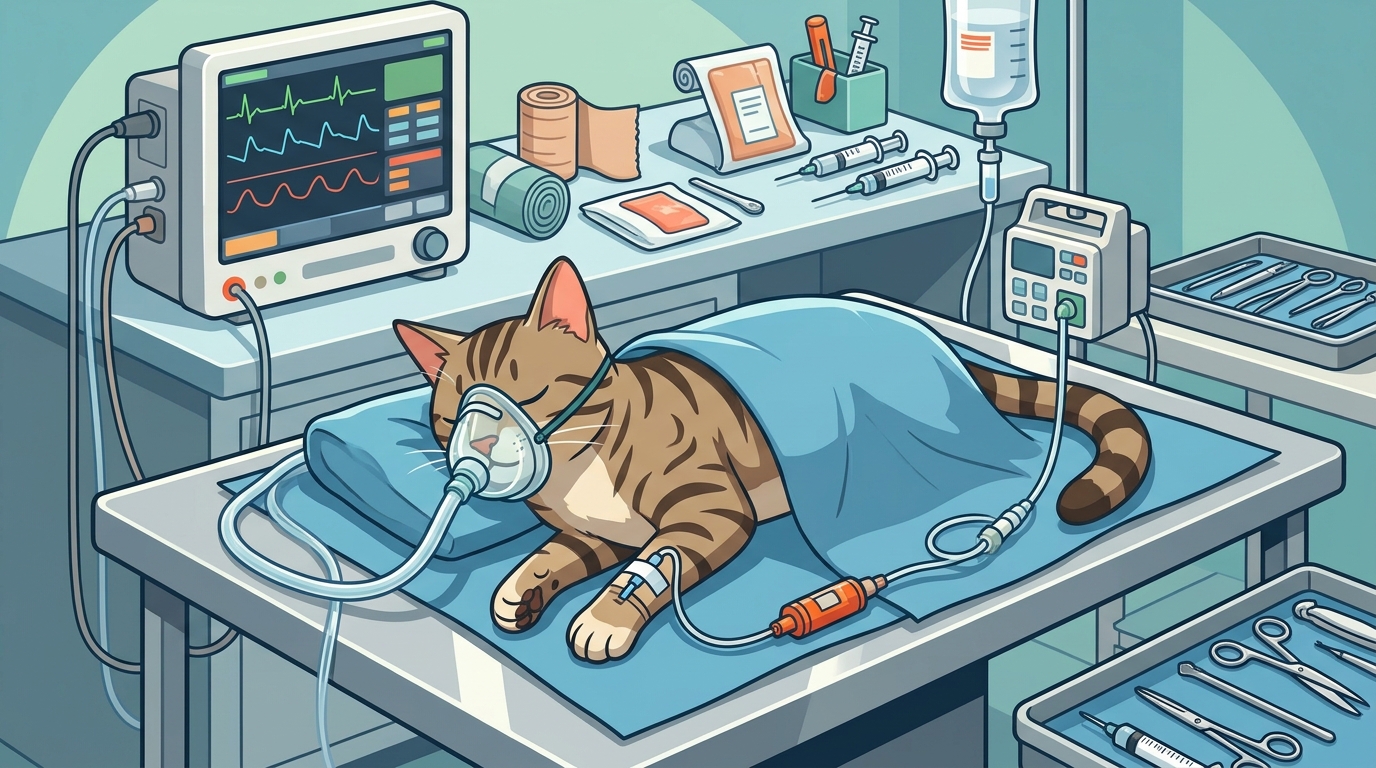
Critical care monitoring is the continuous observation of a patient's vital signs and condition. In the first hours after surgery, this is essential. The team adjusts medications and fluids as needed. They manage pain to keep the cat comfortable. This phase sets the stage for long-term recovery.
For example, a cat recovering from abdominal surgery may need antibiotics. The team administers these to prevent infection. They also monitor the incision site. This careful attention ensures the cat heals properly. It is a critical part of the emergency stabilization process.
Key Takeaways
- Emergency triage determines the priority of care for traumatized cats.
- Stabilization of airway, breathing, and circulation is the first medical priority.
- Diagnostic imaging reveals hidden internal injuries that guide treatment.
- Emergency surgery repairs life-threatening damage in the first hours.
- Critical care monitoring ensures stability after surgical intervention.
- Specialist collaboration enhances the quality of trauma care.
Frequently Asked Questions
How long does emergency stabilization take?
Stabilization can take from a few minutes to several hours. It depends on the severity of the injuries. The team works as fast as possible to keep the cat alive.
What is the most common cause of severe trauma in cats?
Being hit by a vehicle is the most common cause. Falls from heights are also frequent. Both can cause severe internal and external injuries.
Do all traumatized cats need surgery?
No, not all cats need surgery. Some injuries can be treated with medication and rest. Surgery is reserved for life-threatening conditions.
How is pain managed during the first hours?
Pain is managed with medications administered intravenously or orally. The team adjusts the dosage based on the cat's response. This ensures comfort during treatment.
Can a cat survive severe trauma?
Yes, many cats survive severe trauma with prompt veterinary care. The first hours are critical for survival. Quick action improves the chances of a full recovery.
Conclusion
The first hours after a cat arrives with severe trauma are intense and critical. The focus is on stabilization, diagnosis, and treatment. At Los Angeles Animal Specialty Emergency & Rehabilitation, our team is prepared for these challenges. We provide compassionate and expert care to give your pet the best chance of survival. If your cat is in an emergency, call us immediately at (323) 800-VETS (8387) or come directly to our hospital. Our door is always open.