
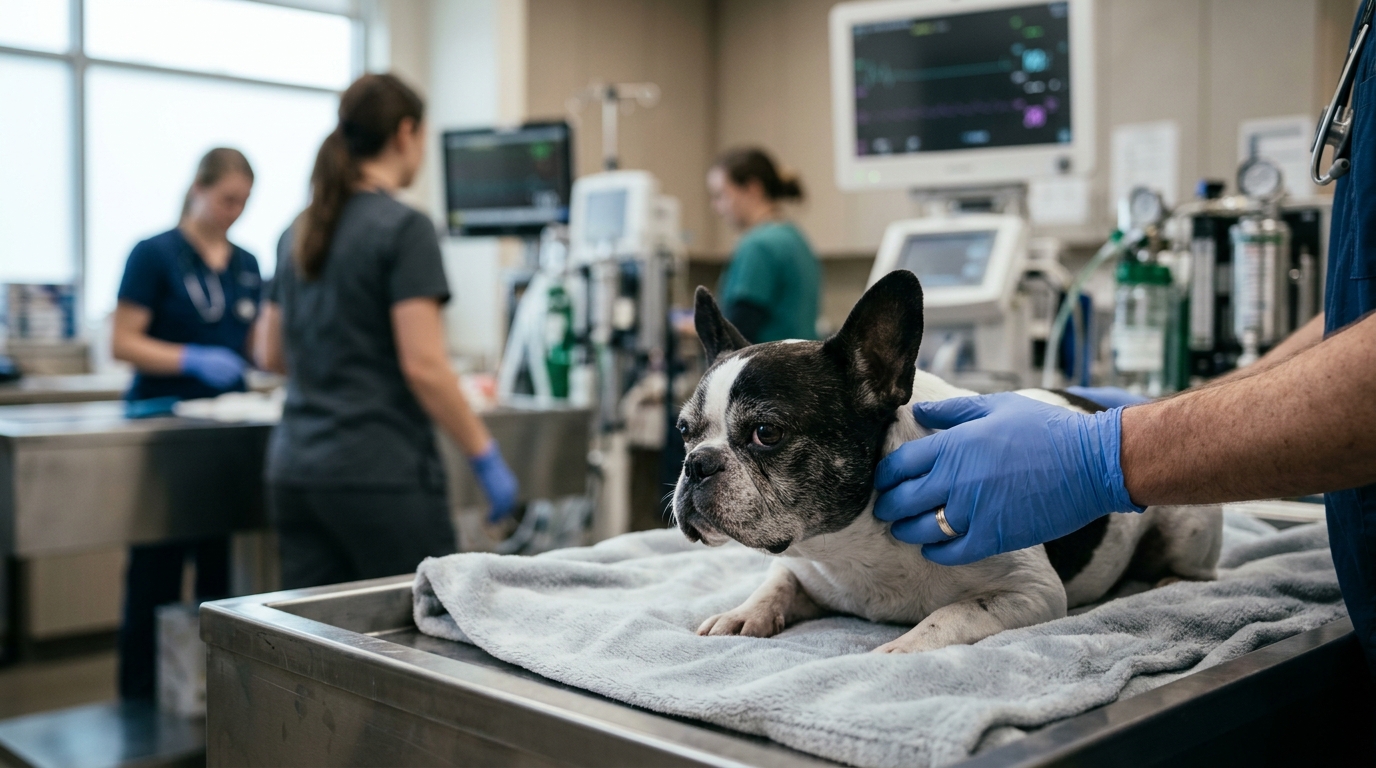
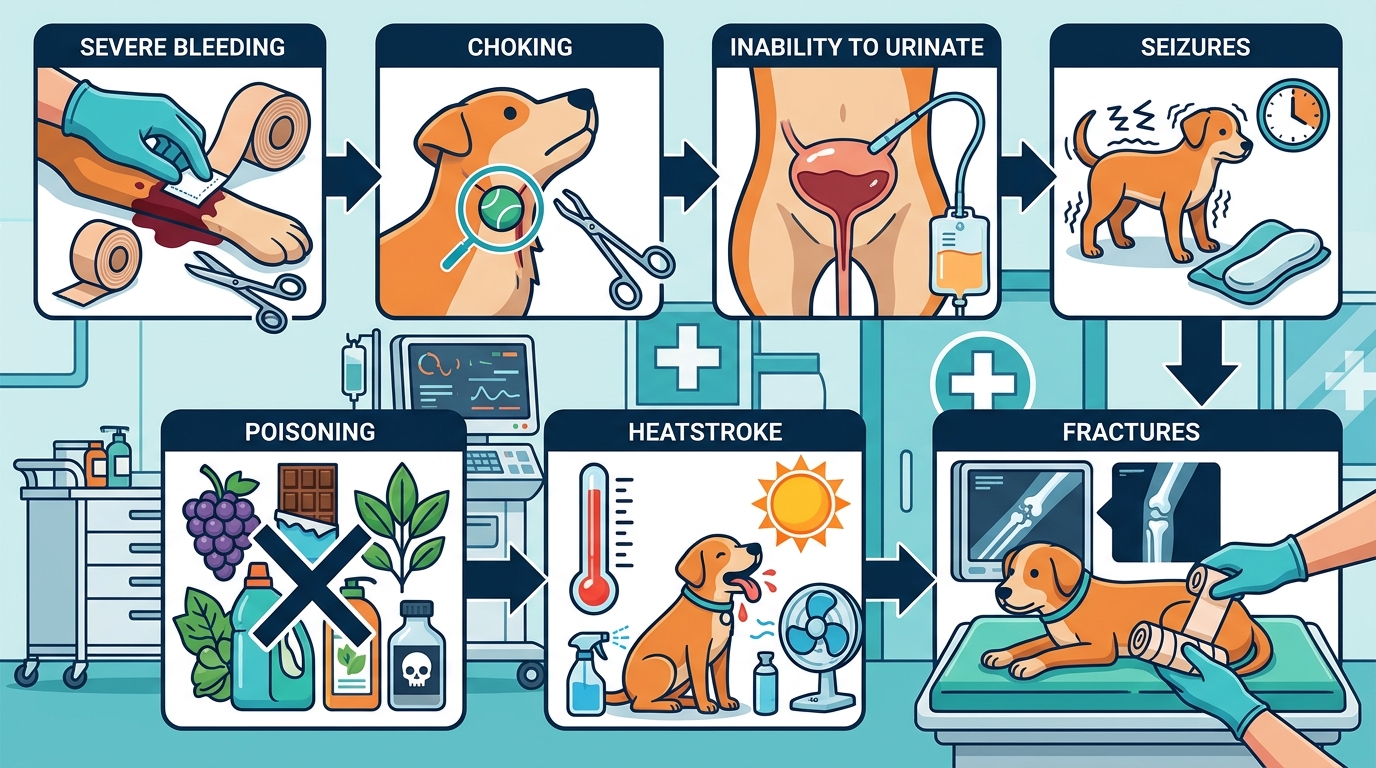
Recognizing critical pet emergencies early is vital for survival. The seven most common emergencies include severe bleeding, choking, inability to urinate, seizures, poisoning, heatstroke, and fractures. At Los Angeles Animal Specialty Emergency & Rehabilitation (LAASER), our team treats these conditions daily. Knowing the signs allows you to act fast and seek immediate professional care.
Severe Bleeding and Wounds
Severe bleeding is a top priority in emergency medicine. If a wound does not stop bleeding after five minutes of firm pressure, it is a medical emergency. You should apply a clean cloth to the area and keep pressure steady. Do not remove the cloth if blood soaks through; add more layers on top. This type of trauma can lead to shock rapidly. Our emergency team is equipped to stabilize pets with significant blood loss immediately upon arrival.
Choking and Respiratory Distress
Choking or difficulty breathing is a life-threatening condition that requires instant action. Signs include nonstop coughing, gagging, or an inability to inhale. If you suspect choking, check the mouth for visible objects only if safe to do so. Never force a pet's mouth open if they are aggressive or panicking. Instead, head to the nearest emergency facility. At LAASER, we prioritize respiratory cases in triage to ensure airway management begins without delay.
Inability to Urinate or Defecate
Inability to urinate is a critical emergency, especially in male cats. Straining without producing urine indicates a blockage that can cause kidney failure within hours. This condition is often painful and requires immediate veterinary intervention. Do not wait for the pet to try again later. A blocked urethra is a medical crisis. Our critical care team can perform procedures to relieve the blockage and stabilize the patient's electrolyte levels.
Seizures and Neurological Changes
Seizures are frightening but common in emergency settings. A seizure involves uncontrolled muscle contractions, loss of consciousness, or staggering. If your pet has a seizure, do not put your hands near their mouth. Move objects away to prevent injury. Time the seizure and note the symptoms for the veterinarian. Neurological events can indicate poisoning, brain issues, or metabolic imbalances. Our neurology specialists at LAASER are available to evaluate complex neurological cases.
Poisoning and Toxic Ingestion
Poisoning is one of the most frequent reasons pets visit emergency hospitals. Common toxins include chocolate, xylitol, antifreeze, and rodent poison. If you suspect ingestion, do not induce vomiting unless instructed by a professional. Bring the packaging or a sample of the substance if possible. Time is critical in toxicology cases. Our team works with poison control protocols to administer antidotes and supportive care quickly.
Heatstroke and Overheating
Heatstroke is a dangerous condition during hot weather. Signs include excessive panting, drooling, weakness, and collapse. Move the pet to a cool area and offer water if they are conscious. Do not use ice water, as this can cause shock. Wrap them in a damp towel and transport them to the vet immediately. Heatstroke can cause organ damage even if the pet seems to recover. Our hospital provides cooling therapies and monitoring to prevent secondary complications.
Fractures and Severe Lameness
Fractures or severe lameness indicate significant trauma. If a pet cannot bear weight on a limb or is crying in pain, they need evaluation. Do not attempt to set the bone yourself. Keep the pet calm and limit movement. Fractures can be open or closed, and both require professional treatment. Our surgical team at LAASER handles complex orthopedic cases with advanced imaging and surgical techniques.
Key Takeaways
- Severe bleeding that does not stop after five minutes of pressure is an emergency.
- Choking and difficulty breathing require immediate transport to a hospital.
- Inability to urinate, especially in male cats, is a life-threatening blockage.
- Do not restrain a pet's mouth during a seizure; move hazards away instead.
- Bring packaging or samples of suspected poisons to the veterinary hospital.
- Heatstroke requires cooling and immediate medical attention to prevent organ damage.
- Severe lameness or inability to walk indicates a fracture or serious injury.
Frequently Asked Questions
When should I take my pet to an emergency vet?
You should take your pet to an emergency veterinarian when they experience sudden illness, injury, or a change in condition that could be life-threatening. This includes difficulty breathing, collapse, severe bleeding, seizures, or inability to urinate. If you are unsure, it is always safer to call an emergency hospital for guidance.
What symptoms are considered a pet emergency?
Common emergency symptoms include repeated vomiting, inability to urinate, seizures, choking, severe pain, and trauma. Any condition that causes significant distress or a rapid decline in health warrants immediate veterinary attention. Trust your instincts if your pet seems significantly different from their normal behavior.
Is LAASER open for emergency care?
Yes, LAASER provides 24/7/365 emergency and critical veterinary care. Our hospital is open every day of the year, including holidays. You do not need an appointment for emergency visits; simply come to our hospital at 2500 N. San Fernando Road, Los Angeles, CA 90065.
Do I need a referral to visit LAASER?
No, you do not need a referral to visit LAASER for emergency care. You can bring your pet directly to our hospital at any time. For specialty services, such as cardiology or neurology, a referral from your primary care veterinarian is recommended but not always required for urgent cases.
What should I bring to my emergency vet visit?
Bring your pet, any current medications, and a list of their medical history if available. If you suspect poisoning, bring the packaging or a sample of the substance. Having this information helps our team provide faster and more accurate treatment. You can also complete our client registration form in advance to save time.
How much does emergency veterinary care cost?
Costs vary widely depending on the severity of the condition and the treatments required. Emergency care can be expensive, but it is often life-saving. We offer payment options through Cherry, including 0% APR plans, to help manage the financial burden. Contact our team to discuss payment options before or during your visit.
Does LAASER accept pet insurance?
Yes, LAASER works with most major pet insurance providers. We can provide you with the necessary documentation to file a claim. We also accept CareCredit and offer financing options through Cherry. Check with your insurance provider to understand your coverage before your visit.
Conclusion
Recognizing these seven common pet emergencies can save your companion's life. Knowledge of the signs allows you to act decisively when seconds matter. At Los Angeles Animal Specialty Emergency & Rehabilitation, we are dedicated to providing compassionate, expert care around the clock. If you are worried about your pet, do not hesitate to reach out. To plan your visit or ask questions, today.