
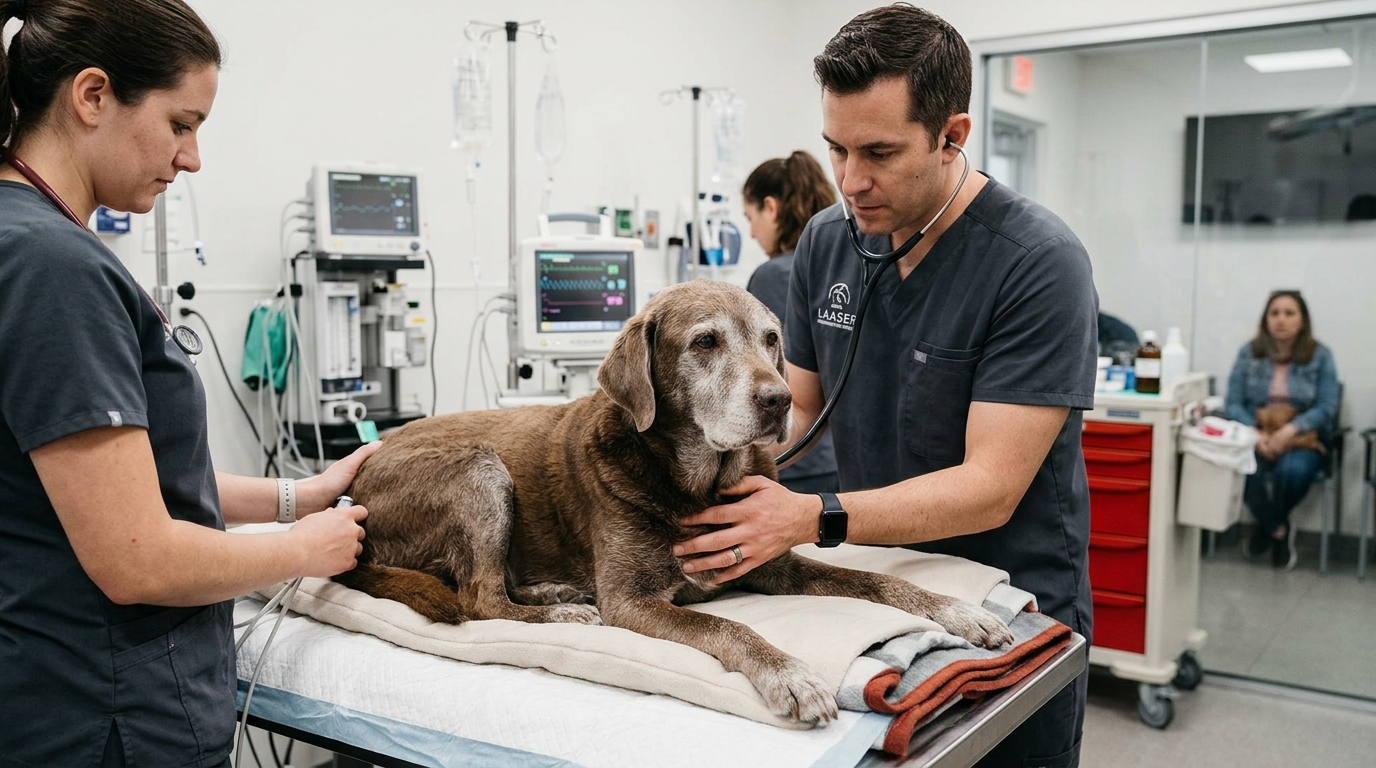
Internal bleeding in senior dogs is a life-threatening emergency that demands immediate, specialized intervention. According to recent veterinary critical care data, dogs over the age of ten face a significantly higher risk of hemorrhagic shock due to age-related organ decline and underlying comorbidities. When a senior dog experiences internal hemorrhage, every minute counts, and the difference between survival and fatality often lies in the speed and sophistication of the emergency response. This guide outlines the critical evaluation process, diagnostic pathways, and advanced treatment options available at specialized facilities like Los Angeles Animal Specialty Emergency & Rehabilitation (LAASER).
Understanding Internal Bleeding in Senior Canines
Internal bleeding, or hemorrhage, occurs when blood escapes from the circulatory system into body cavities or tissues. In senior dogs, this condition is often secondary to underlying pathologies such as coagulopathies, tumors, or traumatic injuries. Unlike external bleeding, which is visible and easily managed with pressure, internal bleeding is insidious and difficult to detect without advanced imaging.
Senior dogs are particularly vulnerable because their physiological reserves are diminished. Hemorrhagic shock is a critical state where the body cannot maintain adequate blood flow to vital organs due to significant blood loss. This leads to cellular hypoxia, organ failure, and potentially death if not reversed rapidly. The causes of internal bleeding in older dogs often include splenic masses, liver tumors, or clotting disorders exacerbated by age-related kidney or liver dysfunction.
Recognizing the signs early is crucial. Symptoms may include pale gums, weakness, collapse, abdominal distension, and rapid heart rate. If you suspect your senior dog is suffering from internal hemorrhage, do not wait. Immediate transport to a facility equipped for 24/7 emergency veterinary care is the only safe course of action.
Diagnostic Evaluation and Triage
Upon arrival at an emergency hospital, the first step is a rapid triage assessment. Triage prioritizes patients based on the severity of their condition, ensuring that those in critical distress receive immediate attention. For a dog with suspected internal bleeding, the triage team will perform a primary survey to stabilize vital functions.
Immediate Stabilization
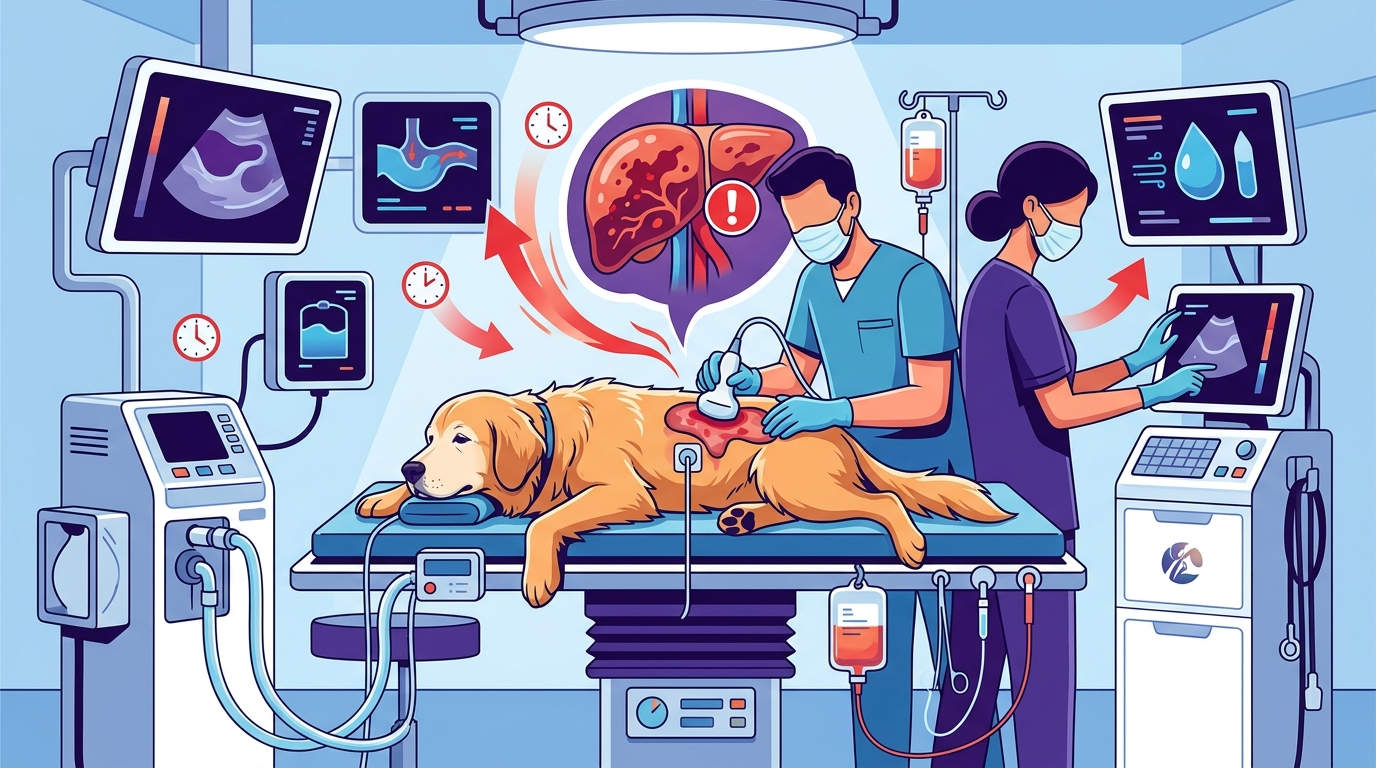
Stabilization involves establishing intravenous (IV) access to administer crystalloids and colloids to support blood pressure. Blood products may be required to replace lost red blood cells and clotting factors. Transfusion medicine is a cornerstone of treating severe hemorrhage, and it requires precise cross-matching and monitoring to prevent adverse reactions.
Advanced Imaging and Diagnostics
Once the patient is stabilized, diagnostic imaging is essential to locate the source of bleeding. Ultrasound is the primary tool for detecting free fluid in the abdomen (hemoperitoneum) and identifying masses in the spleen or liver. In complex cases, advanced neurology and MRI services may be utilized if neurological involvement is suspected, though abdominal ultrasound is typically the first line of defense for hemorrhage.
Blood work, including a complete blood count (CBC) and coagulation profile, helps assess the severity of blood loss and identify any underlying clotting disorders. These diagnostic steps are critical for formulating a surgical or medical treatment plan.
Advanced Treatment Options
Treatment for internal bleeding in senior dogs depends on the source of the hemorrhage, the dog's overall health, and the owner's goals. The two primary pathways are surgical intervention and medical management.
Surgical Intervention
Surgery is often necessary to stop active bleeding, particularly if a tumor or ruptured organ is the cause. Specialized surgery for internal bleeding may involve splenectomy (removal of the spleen), liver lobectomy, or repair of traumatic injuries. Senior dogs require careful perioperative management due to their reduced ability to tolerate anesthesia and stress.
At facilities like LAASER, surgical teams are supported by board-certified surgeons and anesthesiologists who monitor vital signs continuously. The use of minimally invasive techniques, when possible, can reduce recovery time and complications for older patients.
Medical Management
In cases where surgery is not feasible due to the dog's health status or the owner's preferences, medical management focuses on stabilizing the patient and managing symptoms. This includes blood transfusions, administration of clotting factors, and medications to control nausea and pain. Intensive care unit (ICU) monitoring is essential during this phase to detect any re-bleeding or deterioration.
Comparison of Treatment Pathways
| Treatment Modality | Indications | Risks for Senior Dogs | Outcomes |
|---|---|---|---|
| Surgical Intervention | Active bleeding from tumors or trauma | Anesthesia complications, delayed healing | Potential for cure if mass is benign |
| Medical Management | Coagulopathies, poor surgical candidates | Re-bleeding, prolonged hospitalization | Stabilization, but not always curative |
| Blood Transfusion | Severe anemia, shock | Immune reaction, fluid overload | Immediate stabilization of vital signs |
Specialty Department Roles
Complex cases of internal bleeding often require a multidisciplinary approach. At specialized hospitals, various departments collaborate to provide comprehensive care.
Internal Medicine
Board-certified internists play a crucial role in diagnosing the underlying cause of bleeding, especially when it is related to systemic diseases like immune-mediated disorders or endocrine imbalances. They manage complex medical cases and coordinate care with other specialists.
Cardiology
Cardiac function is closely monitored during hemorrhage events, as the heart must work harder to compensate for blood loss. Cardiology specialists can assess heart health and manage any cardiac complications that arise during treatment.
Rehabilitation and Integrative Medicine
Post-treatment, rehabilitation services can help senior dogs recover strength and mobility. Physical therapy, acupuncture, and other integrative therapies support healing and improve quality of life after a critical event.
Post-Emergency Care and Rehabilitation
Recovery from internal bleeding is a gradual process. Senior dogs require close monitoring for signs of re-bleeding, infection, or organ dysfunction. Pain management is critical, as discomfort can impede healing and reduce appetite.
Home care involves strict rest, restricted activity, and adherence to medication schedules. Follow-up appointments are essential to monitor blood work and imaging results. For dogs undergoing long-term medical management, regular check-ins with a referring veterinarian ensure continuity of care.
Integrative approaches, such as nutritional support and gentle physical therapy, can enhance recovery. LAASER's rehabilitation team works with pet owners to create personalized recovery plans that address the unique needs of senior patients.
Key Takeaways
- Internal bleeding in senior dogs is a critical emergency requiring immediate 24/7 emergency care.
- Triaging and stabilization are the first steps, focusing on blood pressure support and oxygenation.
- Advanced imaging, such as ultrasound, is essential for locating the source of hemorrhage.
- Surgical intervention may be necessary to remove tumors or repair trauma, but requires careful perioperative management.
- Medical management, including blood transfusions, is an option for dogs who are not surgical candidates.
- Post-emergency care involves monitoring for re-bleeding and utilizing rehabilitation services for recovery.
- LAASER provides board-certified specialists in internal medicine, cardiology, and surgery for complex cases.
Frequently Asked Questions
What are the signs of internal bleeding in senior dogs?
Symptoms include pale gums, weakness, collapse, abdominal distension, rapid heart rate, and difficulty breathing. Immediate veterinary attention is required.
How is internal bleeding diagnosed?
Diagnosis involves physical examination, blood work, and imaging such as ultrasound to detect free fluid in the abdomen or identify masses.
Can senior dogs survive internal bleeding?
Survival depends on the cause, speed of treatment, and the dog's overall health. Early intervention at a specialized hospital significantly improves outcomes.
What is the role of blood transfusion?
Blood transfusions replace lost red blood cells and clotting factors, stabilizing the patient and preventing shock during the acute phase.
When is surgery recommended?
Surgery is recommended when there is active bleeding from a tumor, trauma, or ruptured organ that cannot be managed medically.
How long is the recovery period?
Recovery varies based on the treatment received. Surgical patients may require weeks of restricted activity, while medically managed patients need ongoing monitoring.
What is the cost of emergency care for internal bleeding?
Costs vary based on diagnostics, treatment, and hospitalization length. LAASER provides transparent pricing and payment options. Visit our payments page for more information.
Contact LAASER
If your senior dog is experiencing signs of internal bleeding, do not wait. Contact LAASER immediately for expert emergency and specialty care. Our team is available 24/7 to provide the compassionate, high-tech care your pet needs.
Contact us online or call 323-800-VETS (8387) to speak with our triage team. For pet owners, you can also register online to streamline your visit.