
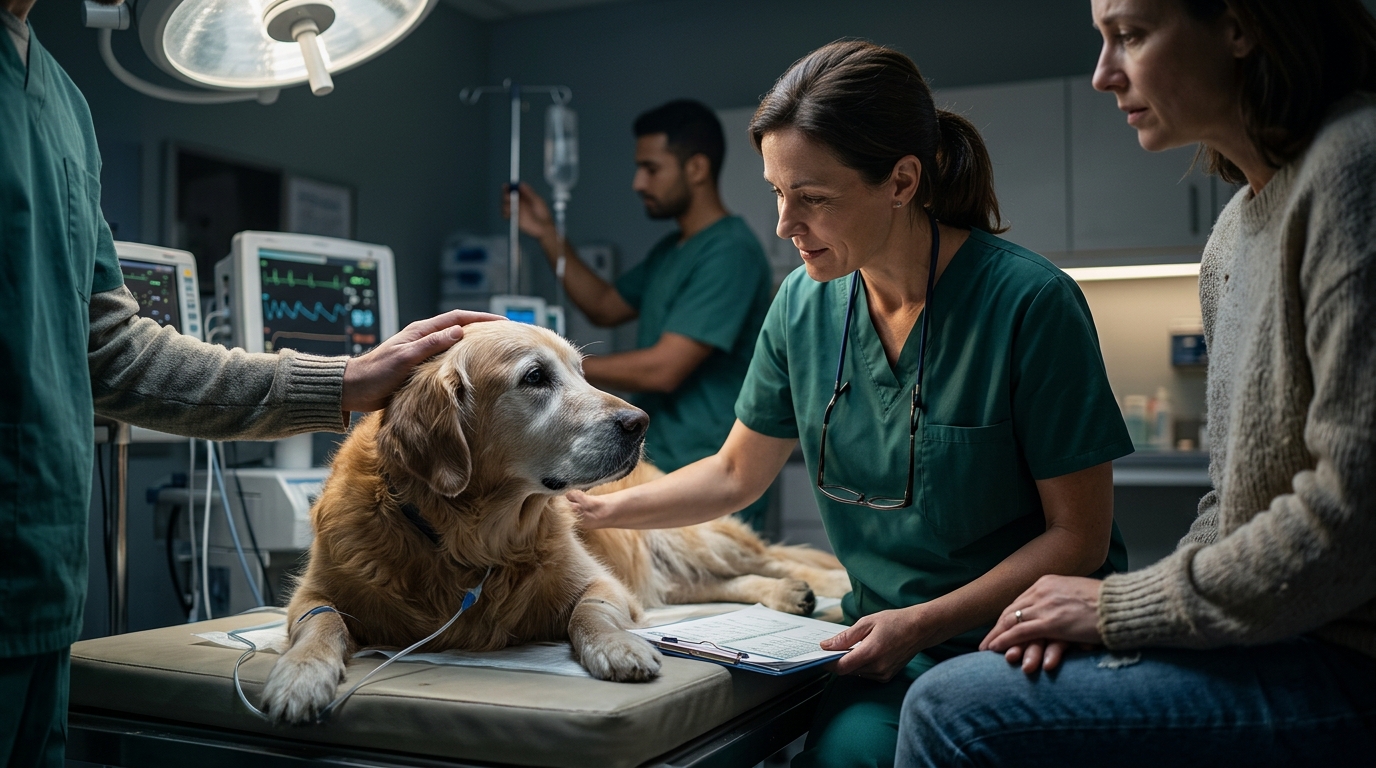
Managing sudden internal bleeding in a senior dog overnight requires immediate veterinary intervention, as this condition is life-threatening and cannot be treated at home. You must transport your pet to a 24/7 emergency veterinary hospital immediately. This guide covers the critical steps for emergency veterinary care and the role of emergency surgery in stabilizing senior patients at Los Angeles Animal Specialty Emergency & Rehabilitation (LAASER).
Emergency Veterinary Care
Internal bleeding in senior dogs is a medical crisis that demands rapid professional assessment. Senior dogs are more susceptible to internal hemorrhage due to age-related changes in blood clotting, organ fragility, and the presence of underlying conditions such as tumors or chronic kidney disease. When a senior dog exhibits signs of internal bleeding, such as pale gums, a distended abdomen, or sudden weakness, the priority is to reach a facility equipped for critical care. LAASER provides 24/7 emergency and critical veterinary care in Los Angeles, ensuring that senior patients receive immediate attention regardless of the time of day.
Recognizing the Signs of Internal Hemorrhage
Identifying internal bleeding early is crucial for survival. Unlike external bleeding, internal hemorrhage is often hidden, making clinical signs the primary diagnostic tool. Common indicators include a rapid heart rate, shallow breathing, and cold extremities. In senior dogs, these signs may be subtle at first but deteriorate quickly. Pale or white gums are a strong indicator of significant blood loss. If you observe these symptoms, do not wait for them to worsen. Time is the most critical factor in managing internal bleeding.
The Triage Process at LAASER
Upon arrival at an emergency hospital, your pet will undergo a triage assessment. This process determines the urgency of the medical needs and ensures that the most critically ill patients receive immediate attention. At LAASER, triage technicians promptly assess your pet’s condition to prioritize care. This rapid assessment allows the medical team to begin stabilizing the patient while diagnostic tests are being prepared. The collaborative approach at LAASER, where emergency teams work closely with specialty departments, ensures that complex cases are managed efficiently.
Stabilization and Diagnostic Testing
Once triaged, the veterinary team will focus on stabilizing the patient. This involves administering intravenous fluids to support blood pressure and oxygen therapy if needed. Diagnostic testing is essential to identify the source of the bleeding. Bloodwork provides information about organ function, blood cells, and clotting factors. X-rays and ultrasound are commonly used to evaluate the abdomen and chest for fluid accumulation or organ damage. Advanced imaging, such as CT scans, may be recommended for certain conditions. These diagnostics guide the treatment plan and help determine if surgery is necessary.
Emergency Surgery
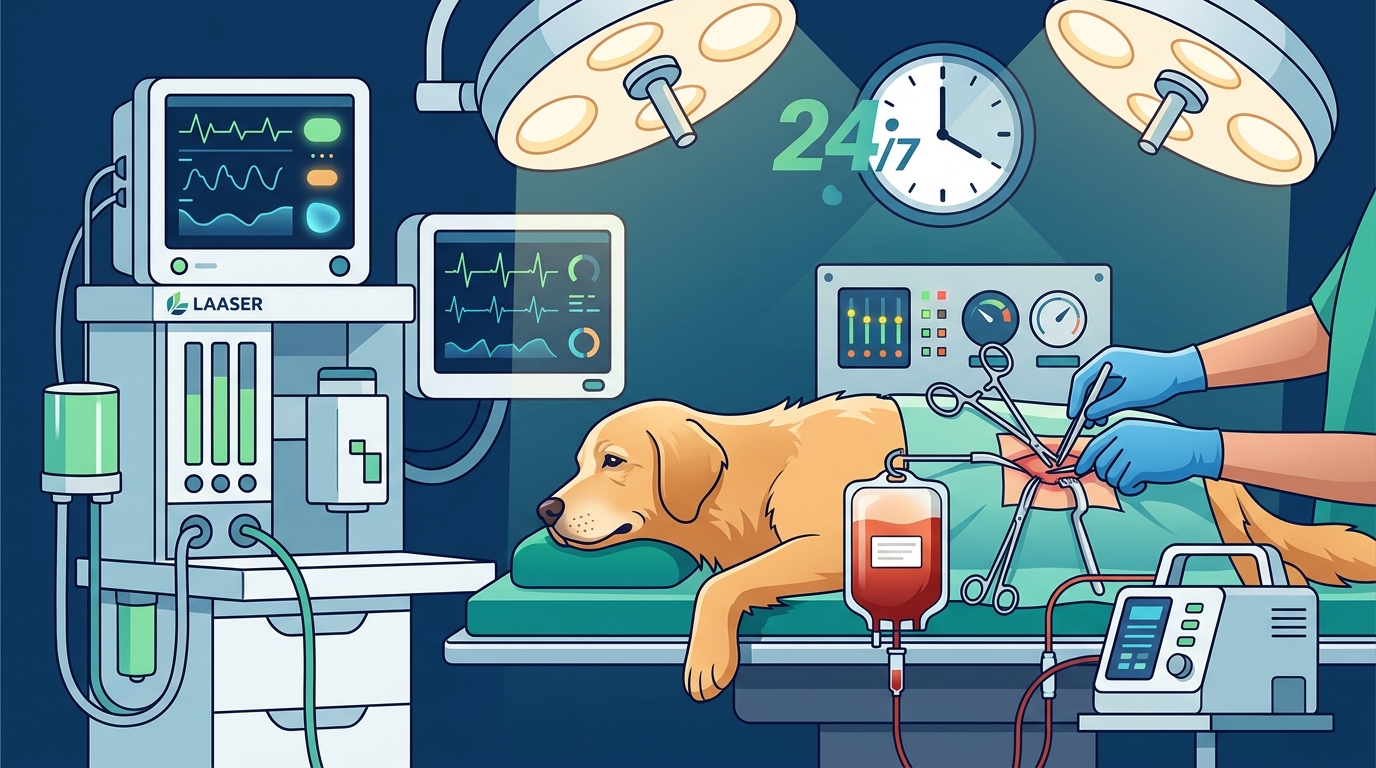
When internal bleeding is severe or the source is identified as a surgical issue, emergency surgery may be required. Senior dogs present unique challenges for surgical intervention due to reduced physiological reserves and potential comorbidities. However, with advanced surgical techniques and specialized care, many senior dogs can recover from life-threatening internal bleeding. LAASER offers advanced soft tissue, orthopedic, and emergency surgical procedures, providing comprehensive care under one roof.
Indications for Surgical Intervention
Surgery is indicated when the source of bleeding cannot be controlled with medical management alone. Common causes of internal bleeding in senior dogs that may require surgery include ruptured spleen, gastrointestinal perforation, or bleeding tumors. The decision to proceed with surgery depends on the patient’s overall health, the location of the bleeding, and the likelihood of a successful outcome. The surgical team at LAASER evaluates each case individually to determine the best course of action.
Surgical Considerations for Senior Patients
Post-Operative Care and Rehabilitation
Recovery from emergency surgery in senior dogs is a gradual process. Patients are typically monitored in a critical care unit for several days to ensure stability. Pain management is a key component of post-operative care, using medications tailored to the patient’s age and health status. Veterinary rehabilitation can also play a role in recovery, helping to maintain mobility and strength. At LAASER, the rehabilitation team works alongside the surgical and emergency teams to provide a seamless care plan. This multidisciplinary approach ensures that senior dogs receive the support they need to regain their quality of life.
Key Takeaways
- Internal bleeding in senior dogs is a life-threatening emergency that requires immediate veterinary care.
- Signs of internal bleeding include pale gums, rapid heart rate, and abdominal distension.
- LAASER provides 24/7 emergency and critical care, ensuring rapid response to medical crises.
- Triage and diagnostic testing are essential for identifying the source of bleeding and guiding treatment.
- Emergency surgery may be necessary when medical management is insufficient to control bleeding.
- Senior dogs require careful anesthetic and post-operative management due to reduced physiological reserves.
- Rehabilitation and integrative medicine can support recovery and improve quality of life after surgery.
- Time is critical; do not delay seeking emergency care if you suspect internal bleeding.
Frequently Asked Questions
What are the most common causes of internal bleeding in senior dogs?
Common causes include ruptured spleen, gastrointestinal ulcers, bleeding tumors, and coagulopathies. Age-related organ fragility and chronic diseases can increase the risk of internal hemorrhage.
How quickly should I seek veterinary care if I suspect internal bleeding?
You should seek emergency veterinary care immediately. Internal bleeding can deteriorate rapidly, and prompt intervention is critical for survival.
Can senior dogs recover from emergency surgery?
Yes, many senior dogs can recover from emergency surgery with proper post-operative care. Recovery may be slower, but with supportive treatment, many achieve a good quality of life.
What diagnostics are used to identify internal bleeding?
Diagnostics include bloodwork, X-rays, ultrasound, and advanced imaging such as CT scans. These tests help identify the source of bleeding and assess organ function.
Is anesthesia safe for senior dogs?
Anesthesia is generally safe when administered by experienced veterinary professionals. Pre-operative assessments and close monitoring help minimize risks in senior patients.
What is the role of rehabilitation in post-surgical recovery?
Does LAASER offer 24/7 emergency care?
Yes, LAASER provides 24/7 emergency and critical veterinary care in Los Angeles, ensuring that pets receive immediate attention when needed.
How can I prepare my senior dog for a potential emergency?
Keep your pet’s medical records accessible, know the location of the nearest 24/7 emergency hospital, and monitor for changes in behavior or physical condition. Regular veterinary check-ups can help identify potential risks early.
Conclusion
Managing sudden internal bleeding in senior dogs is a time-sensitive medical emergency that requires immediate professional intervention. Recognizing the signs, seeking rapid veterinary care, and undergoing appropriate diagnostics and treatment are critical steps in saving your pet’s life. LAASER is equipped to handle these complex cases with its 24/7 emergency services, advanced surgical capabilities, and comprehensive specialty care. If you suspect your senior dog is experiencing internal bleeding, do not hesitate to contact or visit LAASER immediately. Your prompt action can make the difference between life and death.