
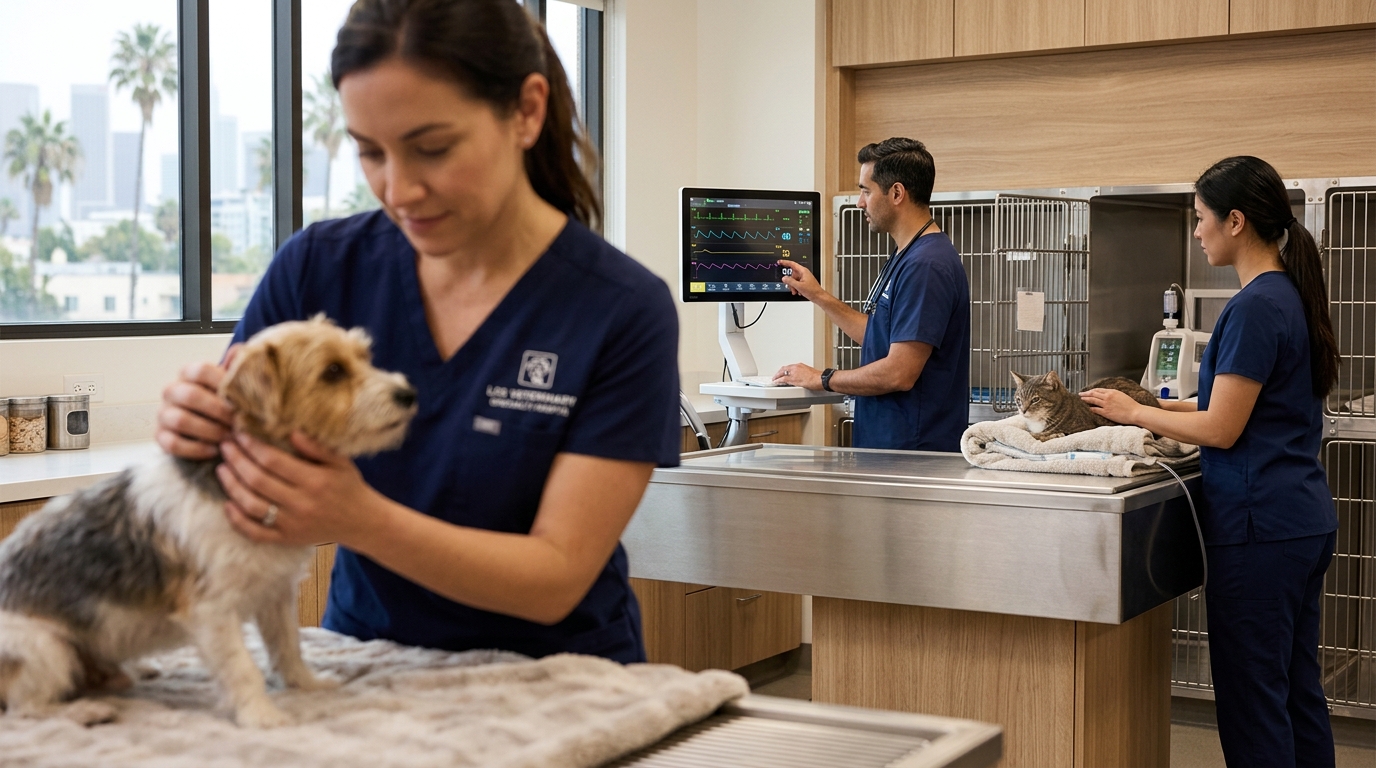
7 Top Specialty Veterinary Services for Emergency Pet Care in Los Angeles
When a pet faces a medical crisis, the speed and depth of diagnostic and treatment options determine the outcome. In Los Angeles, specialized veterinary services provide the advanced expertise required to stabilize and treat complex conditions that go beyond routine care. This guide outlines the seven most critical specialty services available to pet owners during an emergency.
1. Emergency and Critical Care
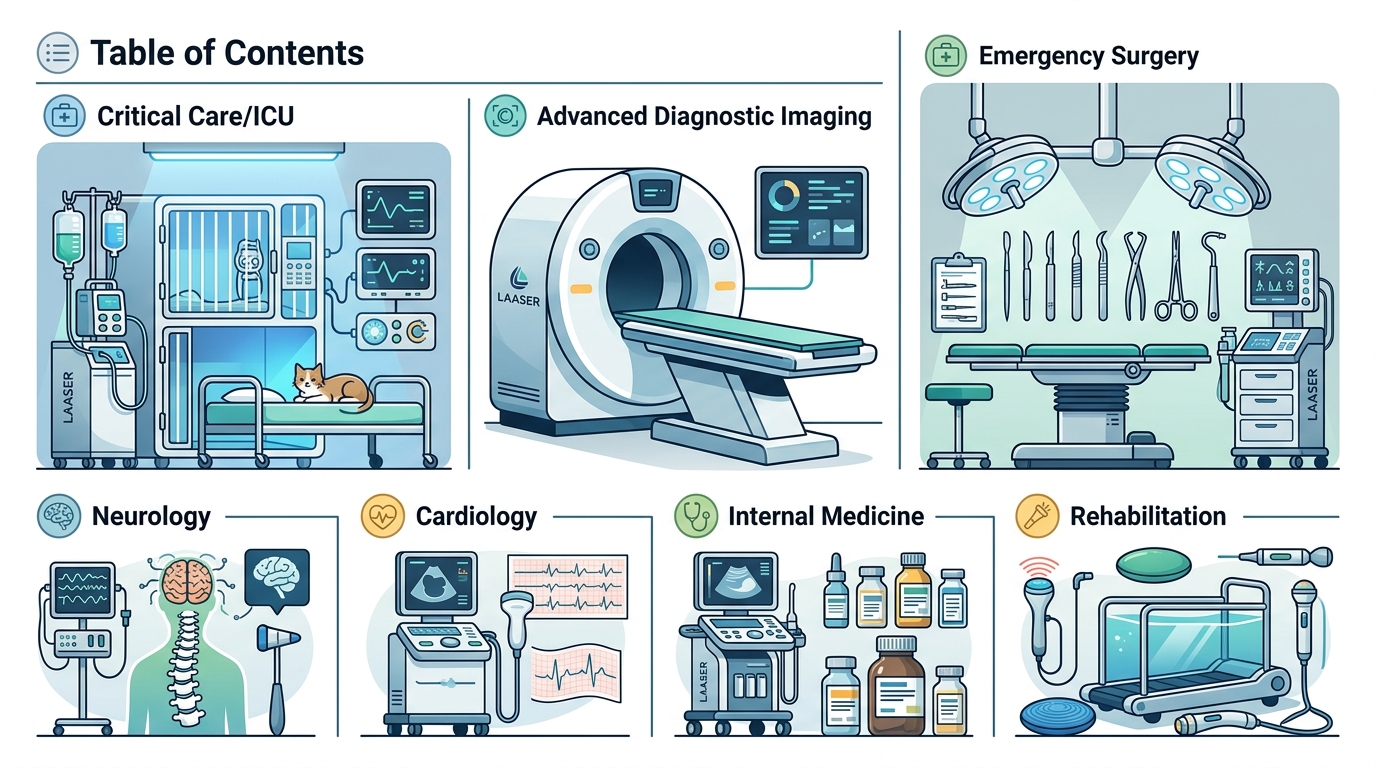
Emergency and critical care is the immediate stabilization and intensive monitoring of pets with life-threatening conditions. This service operates 24 hours a day, 7 days a week, ensuring that pets receive prompt attention regardless of the time. At LAASER, the emergency team works closely with specialty departments to provide seamless continuity of care. This collaborative approach allows for rapid diagnosis and comprehensive treatment without the delays associated with transferring patients between different facilities.
2. Veterinary Neurology and Neurosurgery
Neurology and neurosurgery is the diagnosis and treatment of disorders affecting the brain, spinal cord, and peripheral nerves. Pets exhibiting signs such as seizures, head tilting, or sudden paralysis require immediate specialist evaluation. The neurology team performs specialized examinations and utilizes advanced imaging, such as MRI, to localize the affected area of the nervous system. This precision is vital for determining whether medication or surgical correction is the best path to recovery.
3. Advanced Veterinary Surgery
Veterinary surgery is the use of invasive procedures to treat injuries, diseases, and deformities in animals. Board-certified surgeons handle complex cases ranging from orthopedic fracture stabilization to soft tissue and abdominal procedures. Having a full-time surgical team within an emergency hospital ensures faster scheduling for critical cases. This setup also facilitates better post-operative care, as surgeons can coordinate directly with rehabilitation and internal medicine teams.
4. Veterinary Cardiology
Cardiology is the branch of medicine focused on the diagnosis and treatment of heart and blood vessel diseases. Conditions such as congestive heart failure, arrhythmias, and congenital defects require specialized diagnostic tools. Cardiologists utilize advanced techniques like echocardiography, Holter ECG monitoring, and pacemaker implantation to manage these complex conditions. Early detection and specialized management are essential for improving the quality of life for pets with cardiac issues.
5. Veterinary Internal Medicine
Internal medicine is the specialty dedicated to the diagnosis and treatment of diseases of the internal organs. Internists manage chronic and complex conditions affecting the respiratory, gastrointestinal, renal, and endocrine systems. They employ advanced diagnostics such as endoscopy, ultrasonography, and CT scans to identify underlying causes. This expertise is crucial for pets presenting with vague symptoms or multi-systemic illnesses that require a detailed investigation.
6. Rehabilitation and Integrative Medicine
Rehabilitation and integrative medicine is the use of physical therapy and complementary treatments to restore function and manage pain. This service is vital for pets recovering from surgery, trauma, or neurological conditions. Techniques include physical therapy, acupuncture, and pain management strategies. By working alongside primary care and emergency teams, rehabilitation specialists help pets regain their highest level of performance and self-reliance.
7. Advanced Diagnostic Imaging
Advanced diagnostic imaging is the use of high-resolution technology to visualize internal structures for accurate diagnosis. Modern emergency hospitals utilize tools such as 128-slice CT scanners, digital radiography, and ultrasound. These technologies allow veterinarians to detect subtle abnormalities that might be missed with standard imaging. Rapid access to these diagnostics is a key factor in making timely treatment decisions during an emergency.
Choosing the Right Specialty Service
Selecting the appropriate specialty service depends on the specific symptoms and severity of your pet's condition. For life-threatening emergencies, immediate stabilization by an emergency and critical care team is the priority. If your pet has a known chronic condition or a specific organ system issue, a referral to the corresponding specialist, such as cardiology or internal medicine, is recommended. Always consult with your primary care veterinarian to determine the most appropriate level of care for your pet's unique needs.
Frequently Asked Questions
Is LAASER open for emergency veterinary care?
Yes, LAASER provides emergency veterinary care 24 hours a day, 7 days a week, 365 days a year. Our emergency team is available to evaluate dogs and cats experiencing urgent illnesses, injuries, or trauma at any time.
What symptoms require a visit to a veterinary neurologist?
Symptoms that may require neurology evaluation include seizures, head tilting, uncoordinated gait, sudden paralysis, or changes in mental status. If your pet exhibits any of these signs, it is important to seek specialist evaluation promptly.
Do I need an appointment for emergency care at LAASER?
No appointment is necessary for emergency visits. You can come directly to the hospital at any time. However, calling ahead allows the team to prepare for your arrival and provides guidance on what to expect.
What is the role of a board-certified veterinary internist?
A board-certified veterinary internist specializes in diagnosing and managing complex medical conditions of the internal organs. They use advanced diagnostic tools to investigate chronic or multi-systemic illnesses that require detailed medical management.
How does rehabilitation medicine help pets after surgery?
Rehabilitation medicine helps pets regain strength, mobility, and function after surgery or trauma. It involves physical therapy and pain management strategies designed to improve the pet's quality of life and speed up recovery.
Can I refer my pet to LAASER for specialty care?
Yes, LAASER accepts referrals from primary care veterinarians for specialty services including internal medicine, neurology, surgery, cardiology, and rehabilitation. Referring veterinarians can submit medical records through an online portal to streamline the process.