
Common Mistakes When Choosing a Specialty Veterinary Hospital for Surgery, Cardiology, and Internal Medicine
Choosing the right facility for your pet's critical health needs is one of the most stressful decisions a pet owner can face. Emergency veterinary care statistics indicate that timely access to specialized diagnostics can improve survival rates by up to 30 percent in critical trauma cases. Many owners make the fatal error of prioritizing convenience or cost over clinical capability. This guide outlines the critical pitfalls to avoid when selecting a hospital for surgery, cardiology, and internal medicine.
Mistake 1: Ignoring Board Certification
The most significant error owners make is assuming that any veterinarian with a DVM degree is equally qualified to perform complex surgeries or manage chronic internal diseases. Board certification represents a rigorous, multi-year fellowship process that goes beyond standard veterinary school curriculum. Board-certified specialists have demonstrated advanced competence in their specific field.
When seeking care for cardiology or neurology, you must verify that the doctor holds credentials from recognized bodies such as the American College of Veterinary Internal Medicine (ACVIM) or the American College of Veterinary Surgeons (ACVS). Without this certification, you risk relying on general practitioners who may lack the depth of knowledge required for complex cases. At LAASER, our team includes doctors who are board-certified in emergency and critical care, internal medicine, neurology and neurosurgery, cardiology, and surgery. This ensures that every patient receives care from an expert who has dedicated their career to a specific discipline. You can review our veterinarian profiles to verify these credentials before booking an appointment.
Mistake 2: Overlooking Diagnostic Technology
Advanced medicine relies heavily on advanced technology. A common mistake is choosing a facility that lacks state-of-the-art diagnostic equipment. For instance, accurate cardiac diagnosis often requires specialized echocardiography and Holter monitoring, which are not available in general clinics. Similarly, neurology cases frequently require MRI or CT scans to visualize soft tissue and neural structures with precision.
According to recent veterinary medical literature, the availability of on-site MRI significantly reduces the time to diagnosis for spinal cord injuries. Early diagnosis leads to faster intervention and better long-term outcomes. LAASER provides access to neurology and MRI services that allow for rapid, accurate assessment of neurological conditions. Facilities that rely on sending samples out for testing or referring imaging to other locations introduce delays that can be detrimental in critical situations. Always ask if the hospital has in-house capabilities for blood work, digital radiography, and specialized imaging. You can learn more about our neurology and MRI services to understand the depth of our diagnostic capabilities.
Mistake 3: Misunderstanding Service Scope
Many pet owners assume that "specialty hospital" is a generic term. In reality, some hospitals focus exclusively on emergency care, while others specialize in internal medicine or surgery. The mistake lies in choosing a facility that does not offer the full continuum of care required for your pet's specific condition. For example, a pet requiring complex orthopedic surgery may also need intensive care monitoring and post-operative rehabilitation. If these services are fragmented across different locations, the stress on the animal increases, and coordination of care decreases.
A comprehensive specialty hospital integrates emergency, surgery, internal medicine, and cardiology under one roof. This integrated approach ensures that specialists can consult with each other in real-time. For instance, a cardiology specialist can immediately consult with a surgeon if a heart condition complicates a surgical procedure. LAASER is designed as a full-service specialty hospital, offering surgery, cardiology, and internal medicine alongside emergency care. This holistic model prevents the fragmentation of care that often occurs when owners must navigate multiple facilities.
Mistake 4: Neglecting Rehabilitation Services
Post-operative care is just as critical as the surgery itself. A frequent oversight is selecting a surgical hospital that does not offer integrated rehabilitation services. Physical therapy, acupuncture, and hydrotherapy are essential for recovery from orthopedic surgeries, neurological injuries, and chronic pain management. Without a structured rehabilitation plan, pets may experience prolonged recovery times, muscle atrophy, or even re-injury.
Rehabilitation and integrative medicine is a specialized field that requires certified veterinarians and physical therapists. Integrative medicine combines traditional veterinary care with complementary therapies to enhance healing. LAASER provides a specialized team including certified veterinarians and physical therapists dedicated to physical rehabilitation therapy, acupuncture, and integrative medicine. This focus on recovery ensures that pets not only survive their procedures but thrive afterward. Learn more about our rehabilitation and integrative medicine offerings to see how we support long-term wellness.
Comparing Facility Capabilities
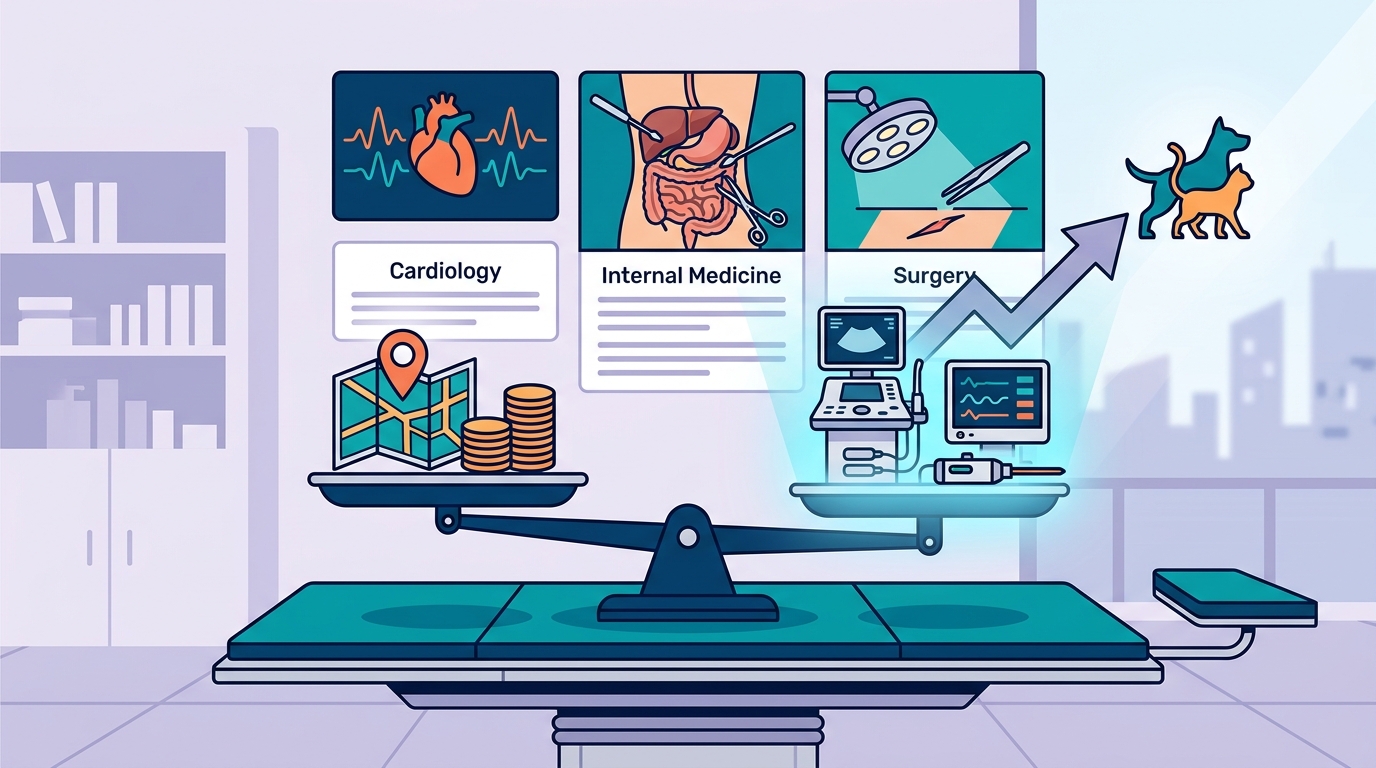
To help you make an informed decision, here is a comparison of key factors to consider when evaluating specialty veterinary hospitals.
| Factor | General Clinic | Emergency-Only Hospital | Comprehensive Specialty Hospital (e.g., LAASER) |
|---|---|---|---|
| Board-Certified Specialists | None | Emergency/Critical Care Only | Surgery, Cardiology, Internal Med, Neurology |
| Diagnostic Imaging | Basic X-Ray | Basic X-Ray, Ultrasound | MRI, CT, Advanced Echo |
| Rehabilitation | Referral Only | Referral Only | In-House Physical Therapy & Acupuncture |
| Continuity of Care | Limited | Fragmented | Integrated Multi-Specialty Team |
Key Takeaways
- Verify Credentials: Always check for board certification in the specific specialty your pet needs, such as cardiology or neurology.
- Check Technology: Ensure the hospital has in-house MRI, CT, and advanced cardiac diagnostic tools to avoid referral delays.
- Integrated Care: Choose a facility that combines emergency, surgery, and internal medicine to prevent fragmented treatment plans.
- Rehabilitation is Key: Look for in-house physical therapy and acupuncture services to support post-operative recovery.
- 24/7 Availability: For critical conditions, ensure the hospital offers round-the-clock emergency and critical care services.
- Specialized Teams: LAASER employs board-certified specialists in emergency, internal medicine, neurology, cardiology, and surgery.
- Proactive Communication: Select a hospital that provides a Pet Parent Portal for easy access to records and communication.
Frequently Asked Questions
What is the difference between a general vet and a specialty hospital?
A general veterinarian provides primary care, vaccinations, and routine check-ups. A specialty hospital employs board-certified specialists who focus on complex diseases, advanced surgeries, and critical care that general practitioners are not trained to handle.
Do I need a referral to see a specialist?
While some insurance plans require a referral, many specialty hospitals, including LAASER, accept direct referrals from pet owners. You can contact us directly to schedule an appointment for cardiology, surgery, or internal medicine.
What types of diagnostics are available at a specialty hospital?
Specialty hospitals typically offer advanced diagnostics such as MRI, CT scans, echocardiography, Holter monitoring, and specialized blood work that are not available in general clinics.
Is rehabilitation necessary after surgery?
Yes, rehabilitation is crucial for optimal recovery. It helps restore mobility, reduce pain, and prevent muscle atrophy. LAASER offers integrated rehabilitation services including physical therapy and acupuncture.
How do I prepare for a cardiology appointment?
Bring any previous medical records, including blood work and X-rays. If your pet is on medication, bring the bottles or a list of dosages. Our team will review your pet's history to provide the best care.
What is integrative medicine?
Integrative medicine combines conventional veterinary treatments with complementary therapies such as acupuncture, laser therapy, and physical rehabilitation to enhance healing and quality of life.
Can I access my pet's medical records online?
Yes, LAASER offers a Pet Parent Portal that allows you to access medical records, request prescription refills, and communicate with your veterinary team securely.
Next Steps
Do not wait for a crisis to evaluate your options. If your pet requires surgery, cardiology, or internal medicine, choose a facility that offers comprehensive, board-certified care. LAASER is committed to providing the highest level of expertise and compassion for your pet's health needs. Contact us today to schedule a consultation or learn more about our services for pet owners. You can also visit our contact page to get directions or call us at 323-800-VETS (8387) for immediate assistance.