
Criteria for Selecting a Specialty Veterinary Hospital With Multiple Services
When a pet faces a life-threatening condition, the margin for error is nonexistent. According to recent industry data, approximately 1 in 4 dogs and cats will experience a medical emergency requiring immediate intervention, making the choice of care facility a critical determinant in survival outcomes. Selecting the right hospital is not merely about proximity; it is about accessing a continuum of care that spans from acute stabilization to specialized rehabilitation. This guide outlines the essential criteria for evaluating specialty veterinary hospitals, ensuring you are prepared to make informed decisions when seconds count. (Los Angeles Animal Specialty)
Board-Certified Expertise and Specialization
The most significant differentiator between a general practice clinic and a specialty hospital is the depth of veterinary expertise available on-site. General practitioners provide excellent routine care, but complex cases require specialists who have completed rigorous residency training and board certification. When evaluating a hospital, verify that the staff includes board-certified veterinarians in key disciplines such as emergency and critical care, internal medicine, cardiology, and neurology. (Payments Los Angeles Animal)
For instance, a pet suffering from a neurological event requires immediate access to a neurologist who can interpret MRI results and perform neurosurgery if necessary. Board-certified specialists are veterinarians who have demonstrated advanced proficiency in their specific field. This level of expertise ensures that your pet receives the highest standard of care, reducing the need for transfers to other facilities during critical moments. (Our Mission Los Angeles)
Look for hospitals that list their veterinary team's credentials prominently. A robust specialty hospital will have doctors dedicated to specific departments, such as cardiology for heart conditions or internal medicine for complex systemic diseases. This specialization allows for more accurate diagnoses and tailored treatment plans that generalists may not be equipped to provide.
24/7 Emergency Availability and Triage Protocols
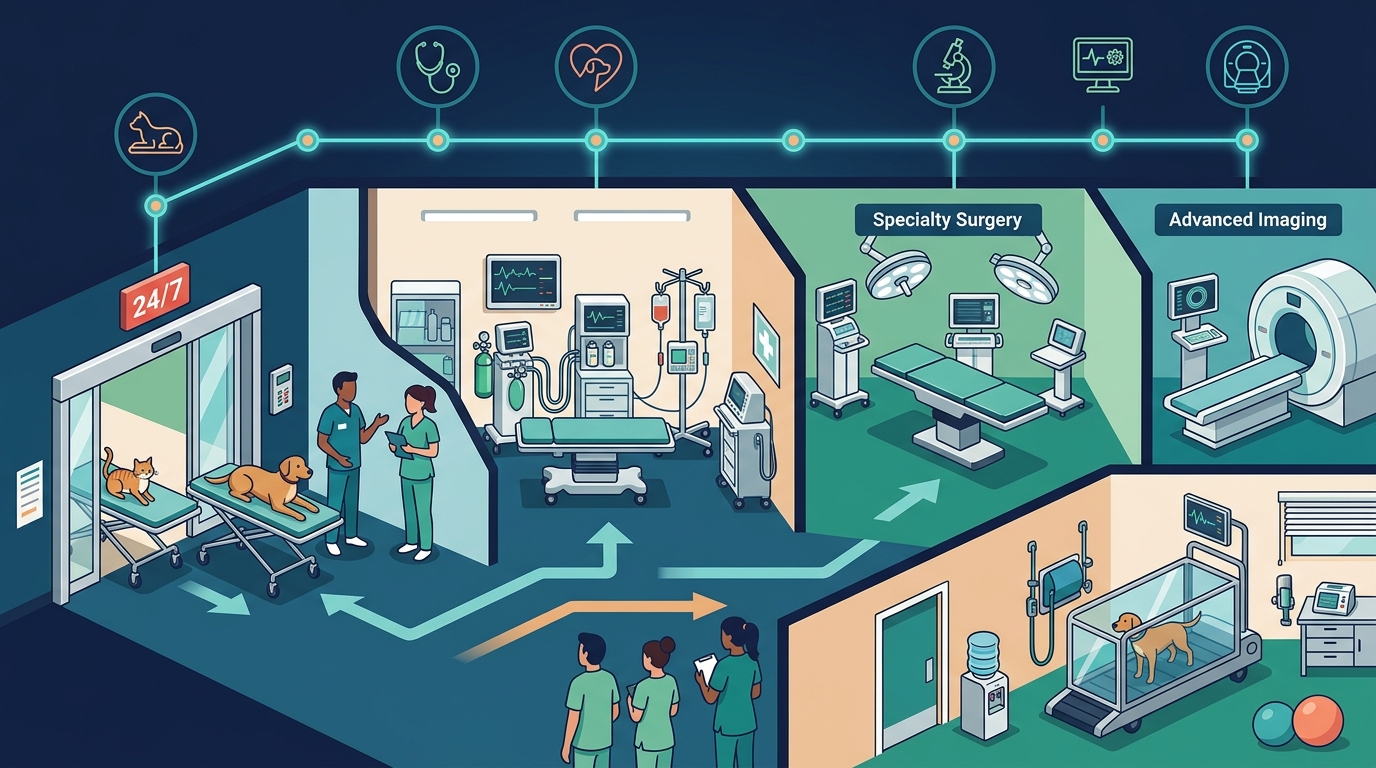
Medical emergencies do not adhere to business hours. The best specialty veterinary hospitals operate 24 hours a day, 7 days a week, 365 days a year. This constant availability is crucial because conditions like bloat, poisoning, trauma, or acute respiratory distress can escalate rapidly at any time. A hospital that closes at night forces pet owners to drive to multiple locations, delaying life-saving treatment.
Beyond hours of operation, the efficiency of the triage process is vital. Triage is the systematic process of determining the priority of patients' treatments based on the severity of their condition. Triage is the prioritization of patient care based on medical urgency. In a high-volume emergency setting, this protocol ensures that the most critically ill animals receive immediate attention, while those with less urgent needs are managed appropriately without compromising care quality.
When visiting or calling a hospital, ask about their intake procedures. Do they have a dedicated triage team? Can they provide updates during wait times? Transparency during the initial contact helps alleviate the stress of the situation and ensures you understand the expected timeline for evaluation.
Advanced Diagnostic and Surgical Technology
Specialty hospitals must be equipped with state-of-the-art technology to diagnose and treat complex conditions. Standard X-rays and basic blood work are often insufficient for specialized cases. Look for facilities that offer advanced imaging such as MRI and CT scans, which are essential for diagnosing neurological disorders, spinal issues, and certain cancers.
Surgical capabilities are another critical criterion. The hospital should have dedicated surgical suites equipped for orthopedic, soft tissue, and neurosurgical procedures. The availability of in-house laboratory services allows for rapid results, which is essential for making real-time decisions during surgery or critical care. Advanced diagnostic technology refers to high-level medical equipment used for precise disease detection and monitoring.
Additionally, consider the hospital's ability to handle anesthesia and pain management. Board-certified anesthesiologists or veterinarians with advanced training in this area ensure that your pet's safety is monitored throughout any procedure. This level of care minimizes risks and improves recovery outcomes.
Rehabilitation and Integrative Medicine Options
Recovery does not end when surgery is complete. Many specialty hospitals now offer rehabilitation and integrative medicine services to support long-term healing and quality of life. These services are particularly important for pets recovering from orthopedic surgery, neurological events, or chronic conditions.
Rehabilitation may include physical therapy, hydrotherapy, laser therapy, and therapeutic exercises. Integrative medicine often incorporates acupuncture and chiropractic care to manage pain and improve mobility. Rehabilitation is the structured process of restoring physical function and mobility after injury or surgery. Access to these services under one roof ensures a seamless transition from acute care to recovery.
When evaluating a hospital, ask about their rehabilitation team. Are there certified veterinary rehabilitation therapists on staff? Do they offer customized home exercise programs? A comprehensive approach to recovery can significantly reduce the time it takes for your pet to return to normal activities.
Pet Owner Resources and Communication
The relationship between the veterinary team and the pet owner is foundational to effective care. Look for hospitals that provide robust resources for pet parents, including online portals for medical records, prescription refills, and appointment scheduling. These tools enhance convenience and ensure that you have easy access to your pet's health information.
Communication is key. The best hospitals keep pet owners informed throughout the entire process, from triage to discharge. They provide clear explanations of diagnoses, treatment options, and prognosis. They also offer support for financial planning, as emergency and specialty care can be costly. Understanding payment options and insurance coordination upfront is essential.
Consider the hospital's approach to client education. Do they provide written discharge instructions? Do they offer follow-up care plans? A hospital that prioritizes client education empowers you to provide the best possible care at home, which is critical for successful outcomes.
Comparison of Service Models
| Feature | General Practice Clinic | Specialty Emergency Hospital |
|---|---|---|
| Hours of Operation | Typically 8 AM to 6 PM | 24/7/365 Availability |
| Staff Expertise | General Practitioners | Board-Certified Specialists |
| Diagnostic Tech | Basic X-ray, Lab | MRI, CT, Advanced Lab |
| Surgical Capabilities | Standard Soft Tissue | Orthopedic, Neuro, Complex |
| Rehabilitation | Referral Required | In-House Services |
Key Takeaways
- Board Certification Matters: Ensure the hospital employs board-certified specialists in emergency care, internal medicine, cardiology, and neurology.
- 24/7 Access is Critical: Choose a facility that operates 24 hours a day, 7 days a week, to handle emergencies at any time.
- Advanced Technology: Look for MRI, CT scans, and in-house laboratory services for accurate and rapid diagnostics.
- Rehabilitation Services: In-house physical therapy and integrative medicine support comprehensive recovery.
- Triage Efficiency: Understand the hospital's triage protocol to ensure critical cases are prioritized effectively.
- Client Resources: Access to online portals for records, prescriptions, and communication enhances the pet owner experience.
- Specialized Departments: Dedicated departments for neurology, cardiology, and surgery indicate a high level of organizational expertise.
Frequently Asked Questions
What is the difference between an emergency vet and a specialty hospital?
An emergency vet clinic focuses on stabilizing acute conditions, while a specialty hospital offers advanced diagnostics, surgery, and long-term management of complex diseases by board-certified specialists.
Do I need a referral to see a specialist?
While referrals from primary care veterinarians are common, many specialty hospitals accept direct consultations from pet owners for both emergency and scheduled specialty visits.
What types of advanced imaging are available at specialty hospitals?
Specialty hospitals typically offer MRI and CT scans, which are crucial for diagnosing neurological, spinal, and internal organ conditions that standard X-rays cannot detect.
How does triage work in an emergency setting?
Triage is the process of assessing the severity of a pet's condition upon arrival. Patients are prioritized based on medical urgency, ensuring that the most critical cases receive immediate attention.
Are rehabilitation services included in emergency care?
Rehabilitation is often a separate but integrated service. Many specialty hospitals offer physical therapy and integrative medicine to support recovery after surgery or critical illness.
What should I bring to an emergency visit?
Bring any current medications, medical records, and a list of your pet's symptoms. If possible, bring a leash or carrier for safe transport.
How can I access my pet's medical records?
Many specialty hospitals offer online pet parent portals where you can view medical records, request prescriptions, and communicate with the veterinary team.
Contact LAASER for Emergency Care
If you are in Los Angeles and need expert veterinary care, Los Angeles Animal Specialty Emergency & Rehabilitation (LAASER) is equipped to handle your pet's most critical needs. With 24/7 emergency services, board-certified specialists in neurology, cardiology, and internal medicine, and state-of-the-art diagnostic technology, LAASER provides comprehensive care under one roof. For immediate assistance, call 323-800-VETS (8387) or visit our contact page to learn more about our services.