
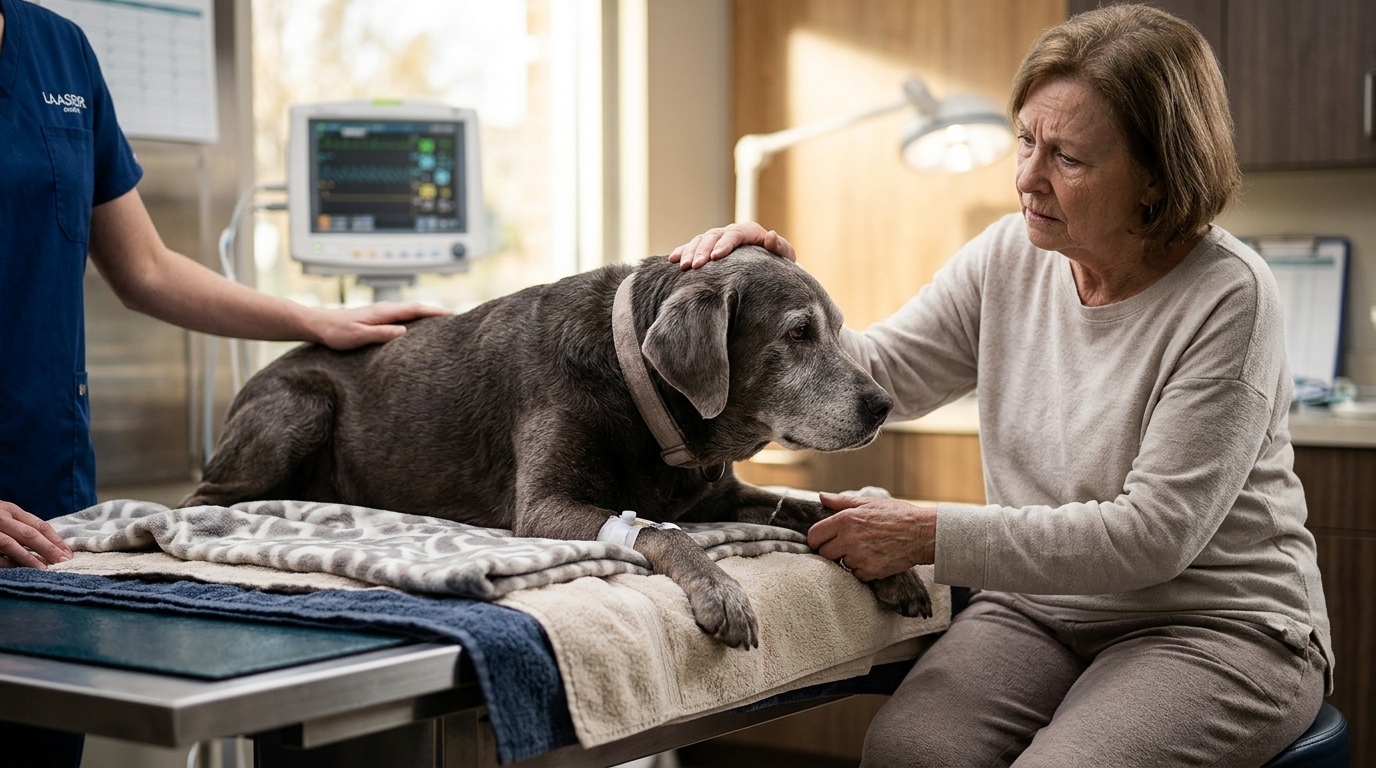
Internal bleeding in senior dogs is a life-threatening medical emergency requiring immediate intervention. At Los Angeles Animal Specialty Emergency & Rehabilitation (LAASER), our 24/7 team provides rapid stabilization, advanced diagnostics, and critical care to manage hemorrhage. Prompt veterinary attention is essential to prevent shock and organ failure in aging patients.
Recognizing the Signs of Internal Hemorrhage
Internal bleeding is often invisible to the naked eye, making early recognition difficult. Senior dogs may exhibit subtle signs that escalate rapidly. Internal bleeding is the loss of blood from vessels into body cavities or tissues, which can lead to hypovolemic shock. Common indicators include pale or white gums, a weak or thready pulse, and rapid breathing. You might also notice your dog appearing lethargic, cold to the touch, or unable to stand. In some cases, the abdomen may appear distended or bloated. If you observe these symptoms, do not wait for them to worsen. Immediate evaluation is critical for survival.
The Triage Process at Arrival
When you arrive at an emergency hospital, your pet enters a triage protocol. Triage is the process of assessing a patient's condition to determine the urgency of their medical needs. At LAASER, triage technicians promptly evaluate your senior dog to prioritize care based on severity. This ensures that the most critically ill patients receive immediate attention. While the waiting room may appear quiet, our medical team is often actively stabilizing critical cases behind the scenes. We understand the stress of waiting, but this system ensures that life-threatening conditions like internal bleeding are addressed first. Our team keeps you informed throughout this initial assessment phase.
Advanced Diagnostics for Hidden Bleeding
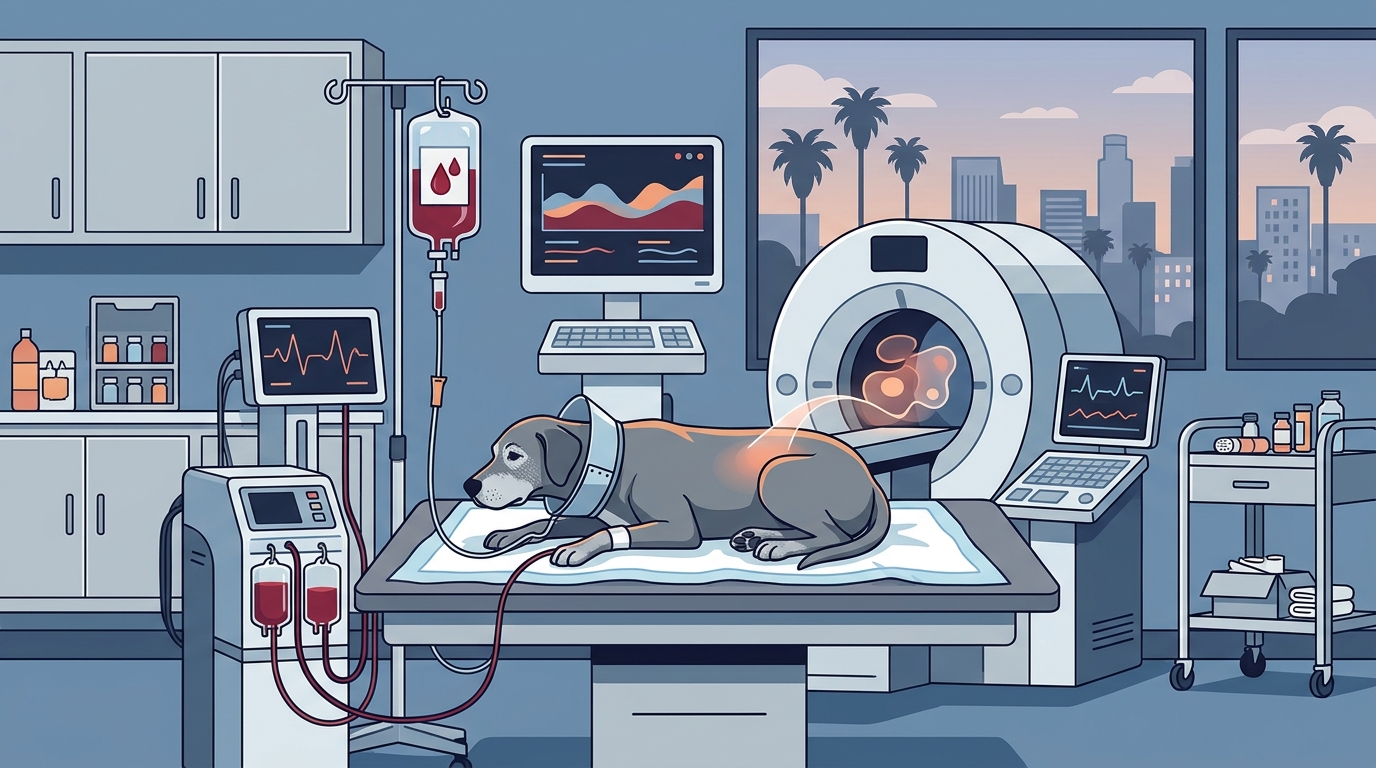
Identifying the source of internal bleeding requires sophisticated imaging and laboratory work. Diagnostic imaging is the use of technology to visualize internal structures and identify abnormalities. Our hospital utilizes advanced tools such as digital radiography, ultrasound, and CT scanners. Ultrasound is particularly effective for detecting free fluid in the abdomen, which often indicates bleeding. Bloodwork provides vital information about organ function, blood cell counts, and clotting factors. These diagnostics allow our specialists to pinpoint the exact location and cause of the hemorrhage. Accurate diagnosis is the foundation for effective treatment and surgical planning.
Stabilization and Treatment Protocols
Once the source of bleeding is identified, treatment begins immediately. Stabilization involves fluid therapy to maintain blood pressure and oxygen support. In many cases, surgical intervention is necessary to stop the bleeding. Our board-certified surgeons perform advanced procedures to address the underlying issue. For senior dogs, we carefully manage anesthesia and post-operative care to minimize risks. Critical care is the specialized treatment of seriously ill or injured patients who require round-the-clock monitoring. Our critical care team provides intensive support during the most vulnerable recovery period. This comprehensive approach ensures that your pet receives the highest standard of care throughout their hospitalization.
Post-Operative Care and Rehabilitation
Recovery from internal bleeding surgery is a gradual process that requires careful management. Senior dogs often need additional support to regain strength and mobility. Our rehabilitation team works closely with your pet to develop a customized recovery plan. This may include physical therapy, pain management, and nutritional support. We monitor your dog's progress closely to ensure they are healing properly. Regular follow-up appointments are essential to track recovery and adjust treatment as needed. Our goal is to help your senior dog return to the highest possible quality of life.
Key Takeaways
- Internal bleeding in senior dogs is a medical emergency that requires immediate veterinary attention.
- Watch for pale gums, lethargy, rapid breathing, and abdominal distension as warning signs.
- Triage protocols ensure that critically ill patients receive priority care upon arrival.
- Advanced diagnostics like ultrasound and CT scans are crucial for identifying hidden bleeding.
- Stabilization with fluids and oxygen is the first step in treating internal hemorrhage.
- Surgical intervention may be necessary to stop the bleeding and address the underlying cause.
- Post-operative rehabilitation is vital for senior dogs to regain strength and mobility.
Frequently Asked Questions
What are the most common causes of internal bleeding in senior dogs?
Common causes include tumors, trauma, blood clotting disorders, and gastrointestinal ulcers. Senior dogs are more susceptible to these conditions due to age-related changes in their bodies.
How quickly should I seek emergency care if I suspect internal bleeding?
You should seek emergency care immediately. Internal bleeding can lead to shock and organ failure within hours. Do not wait for symptoms to worsen.
What happens during the triage process at an emergency vet?
Triage involves a rapid assessment of your pet's condition to determine the urgency of their needs. This ensures that the most critical cases are treated first.
Can senior dogs recover from internal bleeding surgery?
Many senior dogs can recover from internal bleeding surgery, especially with prompt treatment and careful post-operative care. Recovery time varies depending on the underlying cause and the dog's overall health.
What role does critical care play in treating internal bleeding?
Critical care provides round-the-clock monitoring and intensive treatment for seriously ill patients. It is essential for stabilizing senior dogs during the most vulnerable phase of recovery.
How can I prepare my senior dog for an emergency vet visit?
Keep your dog calm and comfortable during transport. Bring any relevant medical records and a list of current medications. Call ahead to alert the hospital of your arrival.
When to Contact LAASER
If your senior dog is showing signs of internal bleeding, do not hesitate to seek emergency care. Our team at Los Angeles Animal Specialty Emergency & Rehabilitation is available 24/7 to provide the compassionate and expert care your pet needs. We are committed to delivering the highest standard of emergency and specialty veterinary care in Los Angeles. To plan your visit or ask questions, today.