
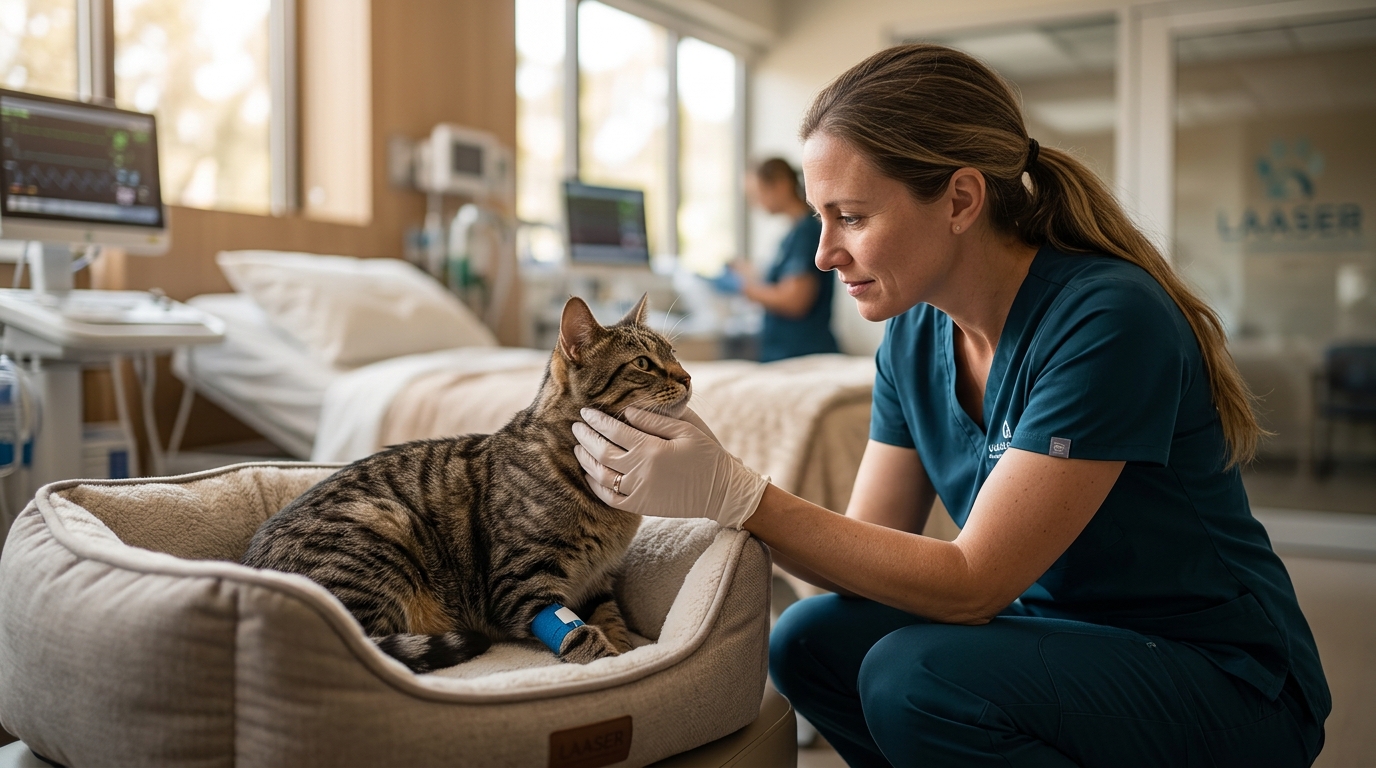
Effective pain management for cats recovering from severe trauma is a continuous, multimodal process that combines careful assessment, targeted pharmacology, and supportive care. At Los Angeles Animal Specialty Emergency & Rehabilitation (LAASER), our team uses evidence-based protocols to ensure feline patients remain comfortable while their bodies heal. Because cats are masters at hiding discomfort, proactive monitoring and tailored treatment plans are essential for optimal recovery and long-term welfare.
Accurate Pain Assessment in Feline Patients
Cats are notoriously stoic, often masking severe pain until it becomes critical. Accurate assessment is the foundation of any effective pain management plan. Veterinary teams must look beyond obvious signs like vocalization and instead observe subtle behavioral changes, such as a tucked posture, reluctance to move, or changes in appetite. The 2022 ISFM Consensus Guidelines emphasize that effective management of acute pain is required for optimal feline welfare, which includes both physical health and mental state. ISFM guidelines recommend using validated multidimensional composite scales to assess postoperative and trauma-related pain in cats. At LAASER, our critical care team utilizes these standardized tools to track pain levels objectively, ensuring that treatment adjustments are based on data rather than guesswork. This rigorous approach helps identify pain that might otherwise go unnoticed, allowing for timely intervention.
Multimodal Pharmacologic Strategies
Modern veterinary medicine relies on multimodal analgesia, which combines different classes of medications to target pain at various stages of the nervous system. This approach allows for lower doses of individual drugs, reducing the risk of side effects while maximizing comfort. Opioids remain a cornerstone of acute trauma pain management, but their use must be carefully monitored. A recent evidence-based review highlights the practical use of opioids in cats, noting that while effective, they require precise dosing to avoid adverse effects. Research on opioid use confirms that understanding brain circuits for effective pain control is crucial for adjusting therapy. In addition to opioids, non-steroidal anti-inflammatory drugs (NSAIDs) and adjuvant medications like gabapentin or local anesthetics are often used. The 2022 AAHA Pain Management Guidelines for Dogs and Cats outline an extensive variety of pharmacologic and nonpharmacologic therapeutic options, providing a framework for safe and effective treatment. AAHA guidelines stress the importance of individualizing these combinations based on the specific type and severity of the trauma.
Non-Pharmacologic and Supportive Care
Medication is only one part of the puzzle. Non-pharmacologic interventions play a vital role in reducing stress and supporting physical recovery. Environmental enrichment, such as providing a quiet, warm, and dimly lit recovery space, can significantly lower a cat's stress levels, which in turn reduces the perception of pain. Gentle handling techniques and minimizing unnecessary physical manipulation are also critical. Physical rehabilitation techniques can be introduced once the patient is stable. According to recent studies, manual techniques can be performed on an anesthetized patient or one that is recovering from anesthesia, meaning the patient does not need to be completely conscious for these interventions to be effective. Physical rehabilitation research supports the use of these methods to maintain joint mobility and muscle strength during the early stages of recovery. At LAASER, our rehabilitation and integrative medicine team works closely with the critical care staff to incorporate these supportive measures into the daily care plan, ensuring a holistic approach to healing.
Continuous Monitoring and Treatment Adjustment
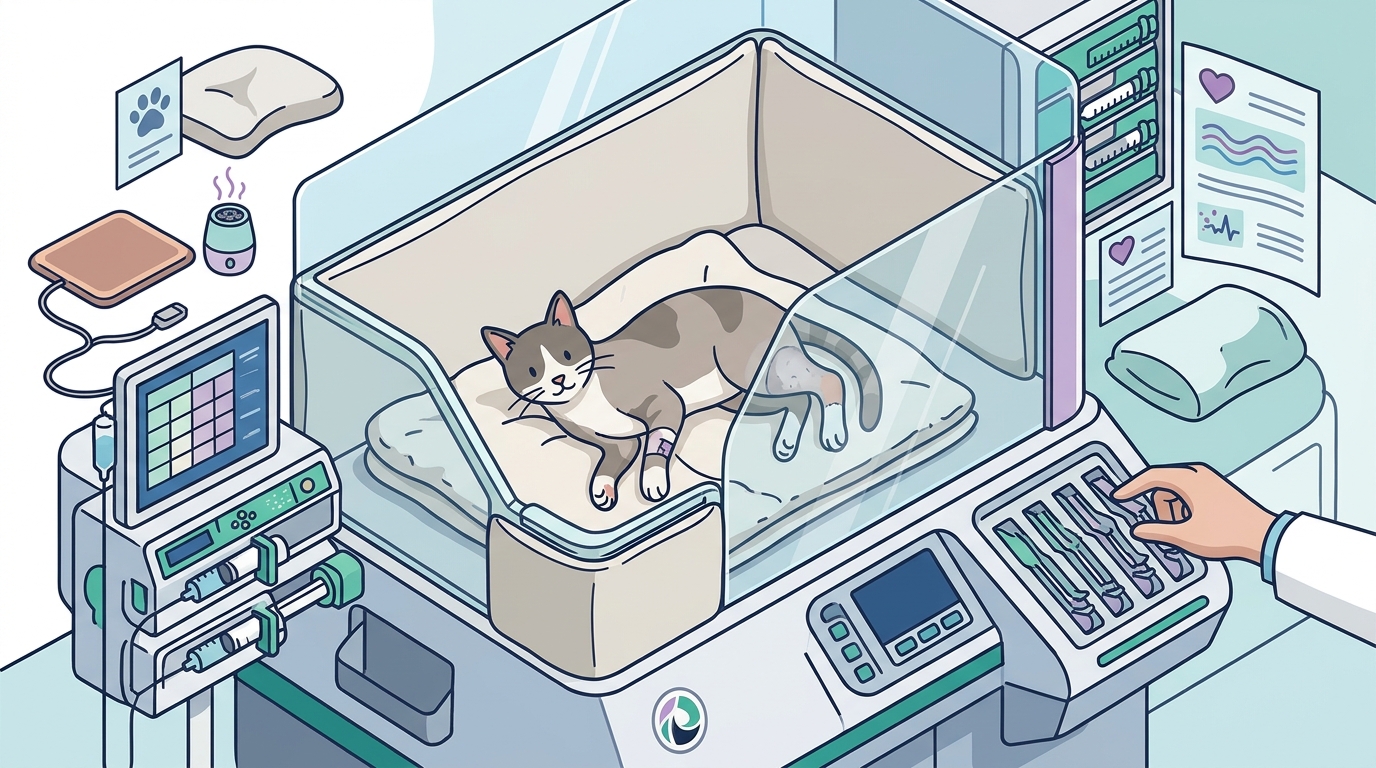
Pain management is not a one-time event; it is a dynamic process that requires continuous monitoring. As a cat recovers from severe trauma, their pain profile can change rapidly. What was severe acute pain in the first 24 hours may evolve into a different type of discomfort as inflammation subsides or as the patient begins to move again. Veterinary teams must regularly reassess pain levels using the same validated scales used during the initial evaluation. This ongoing monitoring allows for the timely adjustment of medication types and dosages. For example, a cat that was heavily sedated with opioids in the first day may require a transition to NSAIDs and adjuvants as they become more active. The goal is to maintain a consistent level of comfort without over-sedating the patient, which could hinder their ability to eat, drink, and participate in their own recovery. This level of attentive, round-the-clock monitoring is a hallmark of specialized critical care facilities like LAASER, where the focus is on both immediate stabilization and long-term functional recovery.
The Role of Specialty Care in Complex Cases
Severe trauma often involves multiple body systems, requiring a coordinated effort from various veterinary specialties. A cat hit by a vehicle, for instance, may suffer from head trauma, internal bleeding, and spinal injuries simultaneously. Managing pain in such complex cases requires a team-based approach. Neurologists, surgeons, and internal medicine specialists must collaborate to ensure that pain management does not interfere with the diagnosis or treatment of other conditions. For example, certain medications might mask neurological signs that are crucial for assessing the extent of brain injury. Studies on head trauma in cats highlight the clinical challenges of assessing and managing traumatic brain injury, where pain control must be balanced with the need for accurate neurological evaluation. At LAASER, our board-certified and specialty-trained teams work seamlessly together. This collaborative model ensures that every aspect of the patient's condition is addressed, providing comprehensive treatment without the delays associated with transferring between different facilities. This integrated care is essential for achieving the best possible outcomes in severe trauma cases.
Key Takeaways
- Effective pain management for cats is a continuous, multimodal process that requires proactive assessment and tailored treatment.
- Cats often hide pain, so veterinary teams must use validated behavioral scales to detect discomfort accurately.
- Multimodal analgesia combines different medication classes to maximize comfort while minimizing side effects.
- Non-pharmacologic interventions, such as environmental enrichment and gentle handling, are critical for reducing stress and supporting recovery.
- Continuous monitoring allows for timely adjustments to the pain management plan as the patient's condition evolves.
- Specialty care teams must collaborate to manage pain in complex trauma cases without interfering with the diagnosis of other conditions.
- Comprehensive, integrated care in a specialized facility ensures that all aspects of a cat's recovery are addressed.
Frequently Asked Questions
How do veterinarians know if a cat is in pain?
Veterinarians use validated multidimensional composite scales to assess pain in cats. These tools help identify subtle behavioral changes, such as posture, activity level, and appetite, which are often the only signs of discomfort in feline patients.
What medications are commonly used for pain management in cats?
Can physical therapy help with pain management in cats?
Yes, physical rehabilitation techniques can be used to maintain mobility and reduce pain. These techniques can be performed on patients who are anesthetized or recovering from anesthesia, making them a valuable part of the recovery process.
Why is continuous monitoring important for pain management?
Pain profiles can change rapidly as a cat recovers. Continuous monitoring allows veterinarians to adjust medications and treatment plans in real-time, ensuring that the patient remains comfortable without being over-sedated.
How does specialty care improve pain management outcomes?
Specialty care teams, including neurologists, surgeons, and internal medicine specialists, collaborate to manage pain in complex trauma cases. This coordinated approach ensures that pain management does not interfere with the diagnosis or treatment of other conditions.
What is the role of the environment in feline pain management?
A calm, quiet, and comfortable environment helps reduce stress, which can lower the perception of pain. Minimizing unnecessary handling and providing a safe space are key components of non-pharmacologic pain management.
Conclusion
Effective pain management for cats recovering from severe trauma is a critical component of their overall recovery. It requires a combination of accurate assessment, multimodal pharmacology, non-pharmacologic support, and continuous monitoring. At Los Angeles Animal Specialty Emergency & Rehabilitation, our team is dedicated to providing this level of comprehensive care. If your cat has experienced severe trauma, our 24/7 emergency and critical care services are available to provide the specialized attention they need. To learn more about our services or to schedule a consultation, please .